1,6-Hexanediol Diacrylate: A Deep Dive into a Versatile Industrial Chemical
Historical Development
Chemists started exploring the world of acrylate esters in the early to mid-20th century as industries needed stronger and more flexible polymers for coatings, adhesives, and plastics. 1,6-Hexanediol diacrylate (HDDA) emerged as a result of curious researchers tweaking base molecules and adding functional groups to create better performance materials. Over the decades, HDDA found its niche through hands-on experiments in curing resins, inks, and advanced composites. From early electroplating labs to large-scale industrial production lines, HDDA has benefited from the lessons learned by generations of chemists, many of whom dealt with the sticky, sometimes unpredictable results of UV-curable acrylates. It hasn’t always been smooth sailing: early batches varied in purity, and only with tighter process controls did HDDA reach a level that offered reproducible results for large manufacturers.
Product Overview
1,6-Hexanediol diacrylate is a difunctional monomer known for its low viscosity and reactive acrylate groups on both ends of a hexamethylene chain. This structure makes it a top pick in the world of UV and electron beam cured products. In my experience working with specialty chemical sourcing, reliable suppliers focus not just on high-purity monomers but rigorous batch tracking. With formulas in coatings for furniture, electronics, and signages, HDDA shows up wherever a strong, resilient, and clear finish is needed. Its popularity comes from the way it contributes to hardness, scratch resistance, and chemical resilience in finished products. Factories that switched to HDDA-based formulations reported improved throughput because of quicker cure and fewer problems with yellowing, which matters a lot in high-visibility surfaces.
Physical & Chemical Properties
HDDA presents as a colorless, clear liquid with a faint odor. It doesn’t mix with water, favoring solvents like toluene, acetone, and other polar organics. At room temperature, HDDA remains stable, though exposure to moisture, heat, or ultraviolet light sparks its reactivity. The density usually falls around 1.01 g/cm³ and its boiling point rises above 100°C. The acrylate groups at both ends allow rapid polymerization, especially under light. In real-world settings, this means that even a small amount of photoinitiator kicks off cross-linking, turning the liquid monomers into tough, durable solids in a matter of seconds or minutes, instead of hours. This property cuts energy bills and makes manufacture more flexible, as smaller companies with limited resources can set up low-cost UV curing stations instead of massive heated drying tunnels.
Technical Specifications & Labeling
Every shipment of HDDA should state purity (no less than 97% for most industrial use), acid value, inhibitor content (like MEHQ for safe shipping), and color (APHA scale). Labels must mark hazardous status, flammability, UN number (UN 1993 for transport), and shelf life. Most suppliers print batch codes to track performance in field applications and comply with REACH or TSCA regulations. Packaging in drums or IBCs, containers need UV-blocking protection, with clear advice to store below 30°C in a dry, well-ventilated spot. Without these details, production teams risk surprises—polymerizing in the drum or curing too slowly on the line—which can cost millions in downtime or rejected stock.
Preparation Method
Industrial-scale production starts from 1,6-hexanediol reacting with acrylic acid in the presence of an acid catalyst, usually under inert gas to exclude oxygen and moisture. The reaction produces water as a byproduct, and removing this water by distillation or extraction drives the conversion. Chemical engineers learned years ago that contaminants in the starting diol or acid cause yellowing and odor in finished resin, so the best plants invest in careful purification steps. Key process checkpoints include real-time monitoring of acid value and color, and keeping the reaction at a carefully controlled temperature to avoid runaway polymerization or dangerous pressure spikes. I remember a pilot operator who narrowly avoided an incident by catching an off-specification temperature alarm—it’s not just theory, the chemistry keeps you on your toes.
Chemical Reactions & Modifications
HDDA readily undergoes free-radical polymerization in the presence of light or peroxides. It acts as a flexible building block, cross-linking with other acrylates or methacrylates to form tough, three-dimensional polymers. Chemists can tweak the polymer properties by blending in other diacrylates or monomers with reactive hydrogens—altering flexibility, toughness, or resistance to solvents. Saponification, hydrolysis, or Michael addition reactions modify HDDA for specific end uses, like improving adhesion or water resistance. An old trick in R&D labs has involved copolymerizing HDDA with soft acrylates for automotive clear coats, bringing out the best balance of scratch resistance and flexibility.
Synonyms & Product Names
Alongside “1,6-Hexanediol diacrylate,” labels and technical sheets may use HDDA, 1,6-bis(acryloyloxy)hexane, or hexamethylene diacrylate. Different suppliers in Europe or China sometimes market it as Hexanediol DA, but the molecule remains the same. Knowing the range of synonyms helps anyone tasked with global sourcing, as a mislabeled shipment can cause production line confusion or regulatory holdups. With tight customs controls in many regions, it is important to scan product names on MSDS and COA forms for all variants to be sure the right chemical arrives safely and on time.
Safety & Operational Standards
HDDA is classified as an irritant to skin, eyes, and lungs, so proper PPE—gloves, goggles, and good ventilation—are essential. In chemical handling, splashing stands out as a constant risk, and anyone who has brushed unprotected skin with raw HDDA never forgets the itching and burning. Factories need clear signage for fire safety, spill kits, and eyewash stations. Storage calls for tight-sealing containers, away from heat and sunlight. Workers receive training not just at hiring but on a routine basis, covering the right way to transfer, mix, and dispose of HDDA waste. Shipping follows IMDG, ADR, or DOT rules for flammable liquids. Emergency protocols include specific antidotes and cooling measures in case of accidental exposure or fire. Operational rigor and ongoing inspection have proven critical in averting small lapses that can turn into major accidents.
Application Area
HDDA runs through countless industrial sectors—paints and coatings, UV-curable inks, adhesives, electronics potting, dental composites, resist formulas for printed circuit boards, and even some specialty medical polymers. In digital printing, its role gives quick-drying, vibrant color layers without blurring. In wood coatings, HDDA provides scratch resistance that stands up to chair-legs, kids’ toys, and daily cleaning. Electronics manufacturers rely on HDDA-based resins for neat, robust encapsulation of delicate circuit elements. As a formulator, I have seen how HDDA-based blends help manufacturers shift from older solvent-heavy, slow-cure coatings to newer, greener, rapid-cure technologies. These shifts cut emissions, save energy, and raise throughput, all major wins for both cost and compliance. Product designers can count on HDDA for customizable cure profiles and high-finish clarity, adapting to new trends like low-VOC and non-yellowing clear coats with support from technical experts.
Research & Development
Industrial chemists and research institutions continue to push HDDA’s performance envelope. In recent years, teams focused on photoinitiator pairings and blend ratios, chasing improved cure speed, adhesion, and resistance to wear in harsh environments. Efforts target challenges in recycled substrates, where adhesives and coatings using HDDA perform reliably even on less predictable surfaces. University labs explored HDDA as a base for conducting polymers, trying to blend the old world of insulation with the demands of flexible electronics and energy devices. Researchers publish papers on alternatives to traditional initiators, working to limit residual monomer or extractables for sensitive applications, such as food packaging or medical devices. These innovations often stem from close collaboration between academic and industrial teams, bridging theory and production reality.
Toxicity Research
Evaluating HDDA’s toxicity draws on both lab work and decades of industrial hygiene data. Acute exposure causes irritation; repeated contact without PPE might trigger allergic responses or occupational asthma. Toxicologists run skin sensitization tests, inhalation studies, and chronic exposure assessments to set safe levels for workplace air and direct handling. Published studies indicate low systemic toxicity when standard precautions are in place, but overexposure can result in dermatitis or more serious respiratory issues. Environmental fate remains a concern, as acrylates may impact aquatic life if mismanaged. This focus on toxicity keeps regulatory agencies and manufacturers alert, aiming for safer processes, better effluent treatment, and continuous monitoring of worker health. My time in compliance roles reinforces that, in practice, maintaining good ventilation and strict operating guidelines protects everyone on the shop floor.
Future Prospects
Demand for HDDA looks strong in advanced manufacturing, especially as industries move toward digital, additive manufacturing, and sustainable chemistry. Improved grades with lower residual monomer or enhanced UV stability line up with tougher government standards and consumer demand for safer end-products. R&D teams research bio-based routes to HDDA and its derivatives, seeking feedstocks from plant sources instead of petrochemicals. Nanotechnology opens doors to new forms of UV-cured composites, where HDDA underpins mechanical strength in lightweight, recyclable products. Environmental pressure already pushes many companies to develop closed-loop manufacturing, where losses and emissions fall close to zero. Companies blending experience from chemistry, process engineering, and environmental science will remain best placed to adapt HDDA to these new worldwide demands.
Behind the Gloss: A Look at Real-World Uses
1,6-Hexanediol diacrylate isn’t on every household shopping list. Step into a printing facility or walk through the factory floor of an electronics manufacturer, though, and the story begins to change. My first real encounter with this compound came through a family friend who ran a small signage shop. He used specialty adhesives and resins every day. One name kept popping up: 1,6-Hexanediol diacrylate. Turns out, it’s a backbone for countless coatings and inks that must last under stress and stay bright under sunlight.
Binding Strength with Flexibility: The Chemical’s Role
Most people never notice the clear finish protecting wooden floors or tabletops in restaurants. The gloss and hardness stay after years of traffic because of resins that get their toughness from crosslinkers like 1,6-Hexanediol diacrylate. Without these ingredients, coatings scratch and degrade much faster. With it, you gain abrasion resistance and better life expectancy. This compound basically acts as a bridge, linking other chemicals together in a tight network, so the end product doesn't chip or peel so easily.
Things We Touch Every Day
From my own work in printing, I noticed just how harsh UV light can be on colored surfaces. Unprotected, prints fade in just weeks. Printers use inks containing crosslinkers to make sure colors last not just months but years. 1,6-Hexanediol diacrylate appears in a lot of UV-curable inks and paints because it enables the entire print to set, harden, and hold up under tough conditions. This alone supports industries from billboard advertising to personalized phone cases, where that kind of staying power is everything for customers.
Electronics, Optics, and Beyond
Electronics are rarely built for easy living. I once fixed a cracked phone screen and noticed the painstaking effort it took to remove the protective layer. That film’s resilience traces back to acrylate-based polymers for coating and encapsulation, where 1,6-Hexanediol diacrylate delivers strong, clear, flexible barriers. In optical fiber cables, similar acrylate coatings shield sensitive glass from the elements, helping maintain fast, reliable internet in millions of homes. It's impressive that a single chemical can drive progress in such different directions, from home finishes to digital backbones.
Health and Safety: Not Just Chemistry on Paper
While most users interact with finished products rather than raw ingredients, the use of chemicals in everyday goods raises questions about worker safety and waste. Workers I spoke to in the printing industry said the biggest worry was handling liquids without proper ventilation or gloves. Acrylates like 1,6-Hexanediol diacrylate can cause skin and eye irritation for those who aren’t careful. Smart businesses protect employees with good gear and proper procedures. They also choose suppliers that offer clear safety guidelines and transparent sourcing.
Building the Future Responsibly
There’s a push now for greener alternatives. Some manufacturers blend plant-based or less toxic crosslinkers, but real progress needs continued research and honest communication up the value chain. Checking for environmental certification, following local disposal rules, and advocating for transparency keep the industry healthy for everyone involved—workers, end users, and the planet.
Learning how essential a compound like 1,6-Hexanediol diacrylate is lets us better appreciate the materials we rely on and the responsibilities they carry, both in the products around us and the choices we make in their creation and use.
Understanding the Chemical
1,6-Hexanediol diacrylate pops up in places where durable plastics, inks, coatings, and adhesives come into play. It gets mixed into materials to boost flexibility and toughness, so it’s no stranger to the workbenches of manufacturers and printers. I’ve worked with resin-based craft and repair materials before, so I know how handling and mixing chemicals needs caution, even when they don’t seem particularly alarming at first glance.
Looking into Health Effects
This chemical has some bite. Short-term exposure, especially when a person breathes in the vapors or gets it on their skin, can cause itching, redness, or rashes. Speaking from personal experience, gloves and long sleeves quickly become non-negotiable once you’ve had dermatitis from working bare-handed around resins. Reactions can come fast—sometimes within minutes for those allergic to acrylates. Long-term exposure brings up bigger concerns, including increased sensitivity, meaning smaller amounts can cause worse reactions down the line.
Breathing in fumes can irritate the nose and throat. NIOSH and other safety agencies advise using ventilation and proper filtering masks every time this chemical is involved, especially in small shops or garages. Safety Data Sheets from major suppliers like Sigma-Aldrich classify it as toxic to aquatic life, which raises flags about both personal health and environmental risk.
Environmental Impact
It’s not just human health on the line. Spills and runoff threaten aquatic systems. Even small releases can poison fish and other life. Having seen backyard workshops accidentally wash chemical waste into storm drains, I worry about what ends up downstream. Once acrylates enter water, they don’t easily break down. Regulations already tell businesses to contain and dispose of waste responsibly, but home users often miss these steps.
Industry Practices and Worker Protection
Responsible plants take safety seriously. Goggles, gloves, and fume hoods see heavy use in production and mixing sites. Training makes a huge difference. I know a friend who manages a small screen-printing shop, and after a minor spill led to a short-term hospital trip for one of his employees, he doubled down on sharing safety protocols. OSHA regulations require information and protective measures, but many small operations lag behind larger companies in compliance, either from lack of awareness or budget.
Practical Solutions for Safer Use
Rethinking workspace setup takes priority before ever opening a container. Good ventilation—fans, open windows, and professional fume extractors—cuts down on bad air. Always storing and labeling chemicals clearly helps everyone avoid mistakes or accidental mixing. Switching to safer alternatives works in some cases, but performance or cost sometimes keeps folks loyal to 1,6-hexanediol diacrylate. Substitutes like water-based resins don’t always measure up in durability for demanding projects.
Clear instructions on disposal and emergency cleanup should go hand in hand with regular use. More awareness and frequent training matter just as much as the latest equipment. At home or at work, being able to spot the signs of exposure—itchy arms, sore throats, headaches—plays an important role. If anything, respect for the chemical’s risks can prevent accidents and keep both people and freshwater safe.
Understanding the Material
1,6-Hexanediol diacrylate stands out in the world of chemicals for its role in coatings, inks, adhesives, and polymers. This colorless liquid reacts easily, so handling it with respect makes sense. I once watched an entire production batch go wrong because a drum sat too close to an open window in midsummer, which sped up the unwanted polymerization and turned expensive raw material into a near-solid mess. Oversights like that mean money lost and plenty of lessons learned.
Why Proper Storage Makes a Difference
This liquid doesn’t like heat, light, or moisture. Even a few degrees higher temperature can push it closer to self-polymerizing, which not only messes up storage tanks but also poses safety risks. The flash point sits around 105°C, so storing drums in a cool, well-ventilated space—preferably below 30°C—slows down reactions and reduces pressure build-up. Sunscreen for chemicals isn’t a thing, so blocking sunlight with opaque containers or storage rooms does the trick.
Air exposure also plays a role. The acrylate group inside is eager to react with oxygen, and that can lead to hazardous peroxides forming over time. Every facility I’ve visited either keeps nitrogen blankets on their tanks or uses thoroughly sealed containers to limit oxygen contact. This may sound like a pain, but the number of workplace fires traced back to peroxide formation isn’t something any safety manager wants to see.
How to Handle With Care
I still remember a spill where someone skipped gloves. Direct skin contact with 1,6-Hexanediol diacrylate causes irritation, sometimes even an allergic reaction. Splash goggles and nitrile gloves give solid protection since splashes are more common than most will admit. For bigger containers, splash shields and aprons offer insurance against unexpected releases.
Ventilation should not be an afterthought. The acrylate odor may be faint, but fumes can lead to headaches or dizziness after extended exposure. Local exhaust fans at transfer stations mean breathing easy, even with larger batch operations. Small steps like labeling transfer lines and posting safety posters nearby remind everyone what’s moving through the pipes.
Fire and Spills: React Fast
This liquid loves to catch fire. That’s been confirmed more than once during risk assessments. Water won’t knock out a chemical fire involving this compound. Carbon dioxide, dry powder, or foam extinguishers tackle the flames best. Regular training on chemical fire safety has spared more than one building in the plants I’ve stepped through.
Spills need attention right away. Small leaks—absorb them with inert material such as sand or vermiculite. Bigger releases mean evicting workers from the area and pulling in trained responders. Always keep material for dike building close to storage areas. Disposal as hazardous waste proves the safest route and meets environmental protection standards. Failing to take spills seriously has left more companies facing both public and regulatory wrath.
Stay Ready and Think Ahead
Routine inspection of drums and tanks keeps unexpected leaks to a minimum. I’ve seen maintenance schedules with weekly checks catch small cracks before they turn major. Good inventory records show if containers linger past their shelf life, because aged 1,6-hexanediol diacrylate turns unpredictable. Investing in staff training and clear guidelines changes how people approach daily work and keeps everyone a little safer.
Looking at the Structure That Powers Modern Polymers
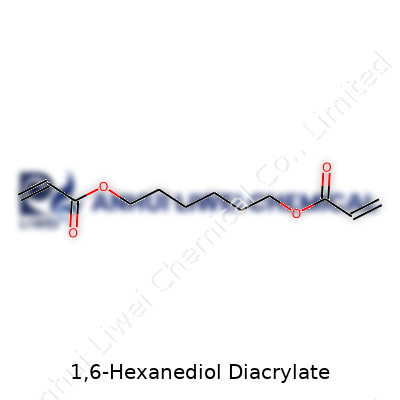
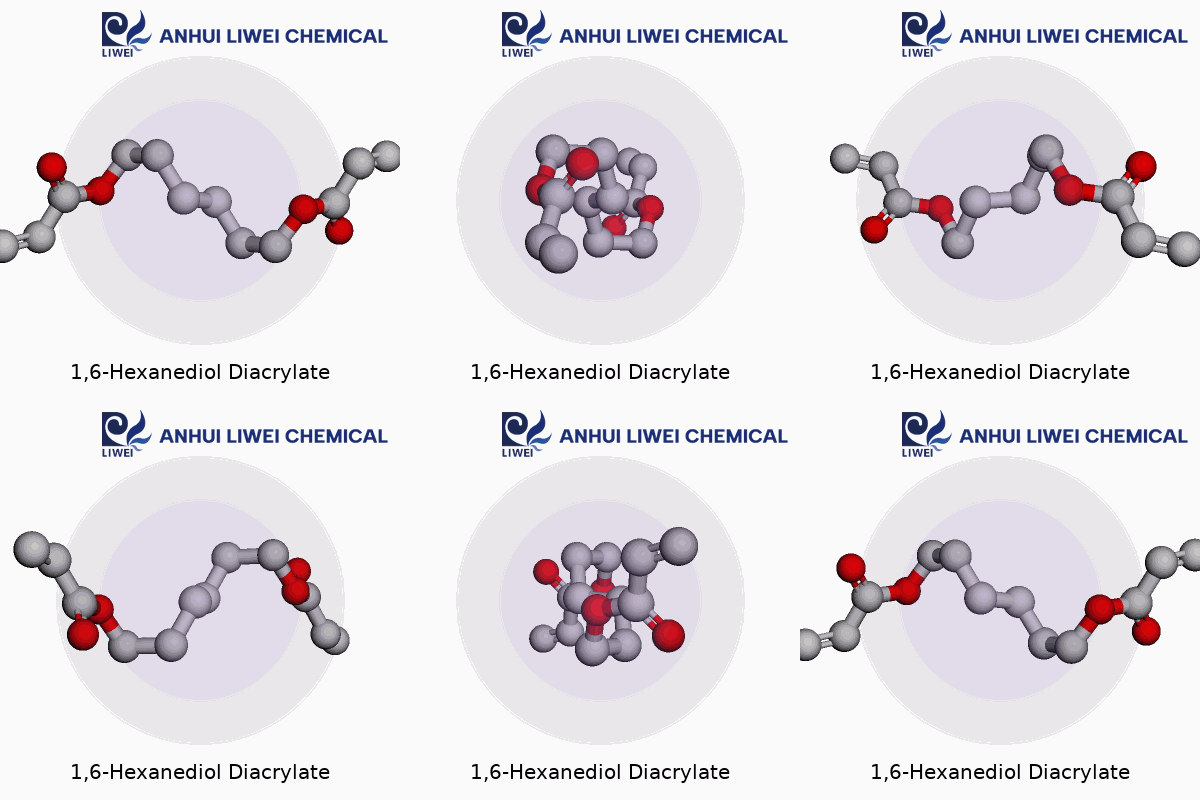
Plastics and coatings shape most of what we touch every day, but the magic often lies in the molecules you don’t see. 1,6-Hexanediol diacrylate—or HDDA to chemists—plays the quiet enabler in the fast-drying, high-performance finishes we expect from paints, adhesives, and even 3D prints. Its chemical formula stands as C12H18O4, with a backbone that carries two acrylate groups tethered to a six-carbon chain. That layout opens the door to flexibility in the finished material and gives manufacturers a chance to balance toughness and workability.
Digging Into the Structure: The Power of Twin Acrylate Groups
Look at HDDA’s chemical structure, and you’ll see a linear hexane chain sandwiched between two acrylate esters. Chemists describe this as:
CH2=CHCOO(CH2)6OOCCH=CH2
This means the molecule offers two reactive ends. In the world of UV-curable polymers, both acrylate groups invite crosslinking. Each group reacts with other acrylates under UV light or heat, snapping together tightly and forming a strong, interconnected network. Thanks to six carbons holding it all together, the material and everything built from it stays flexible enough to withstand stress fractures that often ruin brittle plastics.
Real-World Impact: Why This Matters in Manufacturing
In my own experience working with print shops and product engineers, HDDA has become something of an open secret. Designers trust it to help deliver glossy, impact-resistant coatings that dry almost instantly under UV lamps. This means fewer production delays, less waste, and a sharper finish for electronics, automotive parts, and even floor tiles.
The materials industry likes to talk about “performance” and “innovation”, but it’s in these subtle tweaks to chemical structure that new products earn their reputations. HDDA resists yellowing. It keeps surfaces hard enough to handle daily abrasion at the grocery store checkout line or the airport. It also makes thinner, clearer layers possible, cutting costs and reducing raw material demand. In a time when every manufacturer feels the pressure to work faster and waste less, a compound that ups curing speed and consistency checks several important boxes.
Keeping Safety and Sustainability in Mind
No molecule comes without questions about health and environmental safety. Waste from acrylate compounds, including HDDA, needs strict handling and clear labeling. Workers exposed to uncured liquid HDDA can develop skin irritation or allergic responses. Ventilation and personal protection—gloves, masks—should never be optional. There’s also the concern about what happens when leftover resin gets flushed down the drain. Good practice separates waste, and industry labs have started finding new paths to recycle by-products that once ended up as hazardous landfill.
Raising the Bar for Tomorrow’s Materials
As demand grows for coatings that perform under harsher use, HDDA continues to punch above its weight. Its structure gives manufacturers plenty of ways to adjust hardness, flexibility, and appearance with little extra work. Sometimes, it’s the quiet chemistry behind the scenes that helps everyday objects stay useful, glossy, and looking new longer. For those concerned about the future of safe, efficient manufacturing, keeping an eye on compounds like this only grows more important.
Not Just a Chemical Name: Why It Matters
1,6-Hexanediol diacrylate has a name that sounds straight out of a lab, but its real value shows up in everything from the buttons you press on your keyboard to the dental fillings in your mouth. It’s no secret—industries lean on this stuff for how it helps shape strong, resilient, and flexible materials. Years back, I worked in a shop that printed parts for custom machinery, and watching a liquid formula turn into tough plastic components overnight always fascinated me. That reaction usually relied on smart chemistry behind the scenes. This molecule shows up a lot more than most people realize.
Resins, Coatings, and Why Durability Counts
Companies making paints and surface coatings count on 1,6-Hexanediol diacrylate because you don’t want scratches and dings ruining surfaces within weeks. Manufacturers of UV-cured coatings and inks pour it into their formulas to speed up drying and boost resistance against chemicals and sunlight. This means that a printed label on a shampoo bottle survives bathrooms and rough handling, with no smudges. According to market trackers, the global radiation-cured coatings sector keeps growing fast, in part because these formulas just last longer while staying environmentally friendly by reducing solvents.
Electronics: Making Circuits Reliable
It might sound like something only scientists talk about, but electronics companies use this chemical for printed circuit boards. Circuit boards in computers, cars, and appliances rely on materials that set quickly and lock out moisture. In my experience troubleshooting laptops, I’ve seen firsthand how water can mess up circuits. Reliable insulation, which starts as a tiny drop of precured liquid, helps printed board producers deliver gadgets that don’t fail at the first sign of humidity. The result: electronics work longer under daily strain without constant repairs or replacements.
Dental and Medical Devices
Folks getting dental work probably never ask what’s in the filling, but dentists and lab techs know the value of materials that set rapidly and form snug, tough shapes. This ingredient forms a backbone for light-cured dental fillings, crowns, and bridges. Lab workers appreciate that it hardens in seconds under specialized lamps, cutting down on chair time and making appointments smoother. Medtech manufacturers use it too, since they need materials with low toxicity for contact with skin and tissues. Speed, safety, and dependability push this molecule into heavy use wherever strong polymers are needed fast.
Adhesives and Sealants for Everyday Durability
Anyone who’s patched up a broken toy knows bad glue leads to frustration. Industrial adhesives found in automotive manufacturing, construction, and packaging get much of their strength and flexibility from 1,6-Hexanediol diacrylate. Doors shut firmly, shoes hold out past rainy seasons, and boxes arrive sealed tight because of its contribution. Brands often pick this ingredient to boost bonds so that products hold up despite constant pressure or exposure to heat and moisture. According to chemical supply data, automotive industries especially value its low viscosity during mixing and high performance after curing.
Looking Forward: Finding Better Ways to Use Chemistry
Many manufacturers push for greener production. Formulations built around this molecule support less waste and safer workplaces, since quick cures reduce hazardous fumes and long vent times. The challenge is always to create materials that don’t pollute, hold up well, and stay safe for workers and end-users. Researchers keep experimenting with bio-based options alongside traditional chemistry. Each small gain—like better scratch resistance or shorter dry times—means less downtime and a lighter footprint for all of us.
Sources:- Grand View Research: Global UV Cured Coatings Market Size
- Journal of Dental Research: Innovations in Light-Cured Dental Materials
- ICIS Chemical Business: Trends in Industrial Adhesive Formulations