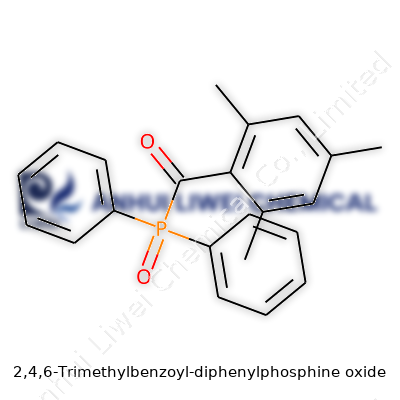
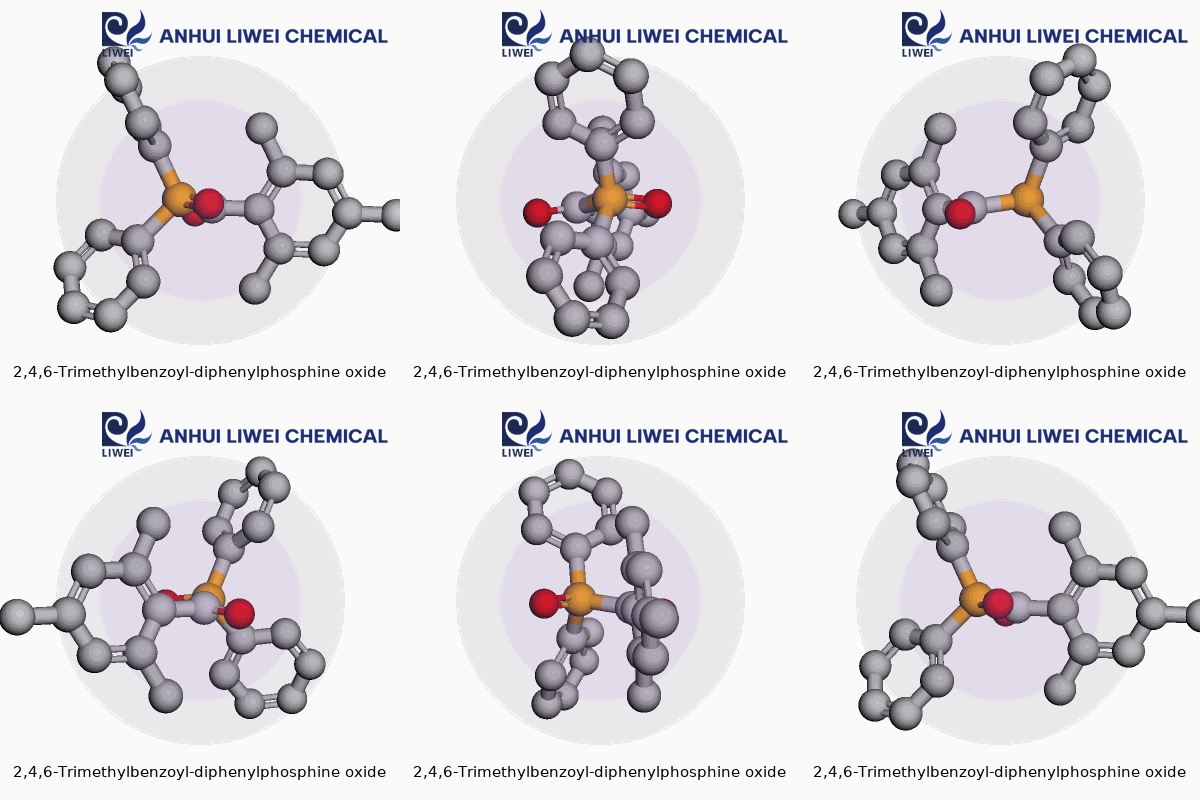
2,4,6-Trimethylbenzoyl-diphenylphosphine oxide: Commentary on a Photoinitiator’s Journey
Historical Development
The story of 2,4,6-Trimethylbenzoyl-diphenylphosphine oxide (TPO) traces back to the growing demand for photoinitiators in the UV-curing industry over the last several decades. Chemists once relied on simple benzoin derivatives, but as technologies in plastics, adhesives, and inks pushed for better curing speeds and depths, the search led to TPO and related compounds. European researchers and companies moved quickly on this—filed patents from the late 1970s show how the molecule appeared as a response to the shortfalls of older photoinitiators in color stability and efficiency. TPO soon began to replace less efficient agents in the production lines for coatings and electronics, offering not only deeper curing but also lower yellowing over time. In my time in a packaging plant, this change-over made for faster production schedules and gave us fewer rejected batches due to uneven cures.
Product Overview
This compound shows up as a yellowish crystalline powder, sometimes described offhand by technologists as "TPO" though its full name can be quite a mouthful. Easy to store in its standard drum because it resists clumping, it became a go-to material for many in the polymer sector. The company purchasing teams keep TPO on hand since formulators often call for reliable, high-purity initiators from trusted suppliers. Its value isn't just in its chemical stability—everyone in the UV world appreciates that TPO brings speed and precision to curing processes, so it remains a steady fixture in supply chains.
Physical & Chemical Properties
As someone who's handled this compound, I know it feels gritty to the touch, slightly heavier than chalk. It melts at around 90-93°C and handles mild heat surprisingly well during transport. Solubility trends show that it favors organic solvents, like acetone and toluene, which can make cleanup a nuisance if you spill unintentional loads. Photolysis under UV light creates radicals swiftly, which prompts the desired polymerization—it's this action that makes it so important in coatings and inks. Chemically, its stability holds up under ambient storage, though the packaging must keep moisture out, or it gets sticky over time.
Technical Specifications & Labeling
Clear labeling on TPO packaging matters more than people think. Every 25kg drum needs the CAS number (75980-60-8), hazard symbols, purity, and batch information. From experience, audit fails at factories usually trace back to missing these finer labeling points. The technical specs often require TPO purity above 99%, minimal water content, and strict maximums for heavy metals. Regular spectroscopic assays back up these claims, and procurement contracts often include these technical confirmations as mandatory checkpoints.
Preparation Method
Making TPO in the lab isn't a project to take lightly. Sourcing 2,4,6-trimethylbenzoyl chloride and diphenylphosphine oxide, reacting them under controlled cold alkaline conditions, yields the main product. Yet, yields drop fast if reagents contain any notable water or air exposure—too much humidity, and side reactions spike. Larger production outfits drive the reaction in jacketed reactors, flood the vessels with nitrogen, and distill off by-products, which keeps product quality up and raw material waste in check. Solid-liquid separation and recrystallization round out the process, a detail that highlights the sophistication behind accessible yellow powder.
Chemical Reactions & Modifications
What sets TPO apart comes from its straightforward, clean bond cleaving under UV light. Formation of reactive benzoyl and phosphinoyl radicals drives fast, thorough polymerization in acrylate monomers, yielding robust plastics and inks. Chemists have experimented with attaching various substituents, tweaking the methyl groups or adding photostabilizers to shift absorption edges or improve curing under different wavelengths. While classic TPO does most of the heavy lifting, demand for tailored initiators means chemical houses tinker with analogs for specialized uses, like low-migration food packaging or optical coatings.
Synonyms & Product Names
Anyone ordering TPO sees the name in a dozen flavors, depending on the supplier: Ivocerin (for dental), Omnirad TPO, Darocur TPO, and Lucirin TPO top the list. Regulatory filings and MSDS documents often list its full chemical name, so backing up product documentation with all possible synonyms helps compliance and communication between multinational partners. Some customers simply ask for "382"—an internal code that stuck from a major supplier catalog.
Safety & Operational Standards
Labs and factories don't mess around with TPO without strict containment systems. Though it rates moderate in acute toxicity, powders cause irritation if handled carelessly—timely eye and respiration protection count as basics, not luxuries. Friends in the safety office remind us to ventilate curing areas well, since photolysis can generate a whiff of odorous by-products. Most modern facilities stick close to ISO 9001 and ISO 14001 standards—material handling SOPs, strict inventory controls, and quarterly compliance reviews. Emergency showers and spill kits stand ready, which reassures those of us who remember the occasional spill on the shift floor.
Application Area
Few materials bring as much impact in such broad industries. TPO finds its way into everything from dental fillings to high-gloss automotive coatings and even 3D printing resins on home workbenches. Its ability to drive fast, thorough polymerization under UV light shaves hours—or even days—off production timelines. Electronics manufacturers prefer TPO for solder mask coatings, since rework rates fall and color stability holds up better than older initiators. Even arts and crafts suppliers source TPO for UV cure adhesives, knowing they can promise quick bonds and durable finishes.
Research & Development
R&D teams keep pushing the uses and safety profiles of TPO. University consortia investigate lower energy curing systems, pairing TPO with LED sources as a way to cut power bills and workspace heat. Some colleagues tinker with nanoencapsulation to keep the photoinitiator locked in resins until exposure, answering calls for lower migration and better control in sensitive applications. Major research papers track the kinetics and polymer chain growth in intricate ways—yet feedback from on-the-floor printers and lab technicians adds just as much value in refining how TPO gets used every shift.
Toxicity Research
New toxicity studies always draw the attention of compliance managers. Current data from animal studies indicate low acute oral and dermal toxicity, though repeated skin exposure can lead to moderate sensitization. Inhalation accidents prompt thorough review, but typical workspace controls keep airborne concentrations well below regulatory limits. Regulatory agencies in the EU and North America keep TPO on the approved lists for non-food contact uses, though ongoing review continues. Environmental fate studies show slow degradation rates in landfills, pushing companies to consider end-of-life management for TPO-containing goods.
Future Prospects
Looking forward, TPO stands at a crossroads. Its performance keeps demand steady in advanced manufacturing, especially as 3D printing and medical device coatings grow. Companies explore greener synthesis with less solvent waste and chase initiators with even lower toxicity footprints for the next wave of regulations. Consumer product companies eye TPO replacements that match its speed but bring more compostability. From my seat, the future of TPO means more careful lifecycle management, transparency in supply chains, and close watch on safety research—so this workhorse compound can keep driving innovation without leaving problems behind.
The Backbone of UV Curing
Ever notice how dental fillings harden almost instantly or how certain coatings dry in just seconds under a blue or purple light? These marvels rest on the magic of UV curing. At the center of that process, 2,4,6-Trimethylbenzoyl-diphenylphosphine oxide (often shortened to TPO) steps up as a top-notch photoinitiator. In everyday language, this chemical makes things happen faster and cleaner in products people use all the time—from your dentist’s composite fillings to the glossy finish on packaging labels.
Real-World Impact in Dentistry and Industry
Dental work stirs up enough anxiety without long waits. UV-curable composites use TPO to harden in seconds under a curing lamp. Patients get in and out quicker. Dentists finish the job with less stress and higher precision. The result sticks, literally and figuratively, making life better for both parties.
On the industrial side, the story runs along the same lines. Printing presses roll out vibrant labels, cartons, and magazines at a pace that would make any assembly line manager smile. TPO kicks off a reaction when hit with UV light, transforming liquid inks and coatings into a tough, dry surface almost before the press even slows down. Less downtime means more output, and every second shaved off translates to cost savings and lower energy use.
Beyond Speed—Safety and Quality
The use of TPO gets most interesting when we talk about safety and effectiveness. In regular photoinitiators, the risk of toxic byproducts can’t be ignored. TPO brings a cleaner reaction, keeps yellowing to a minimum, and holds up well in demanding settings. You get a tough, clear surface on plastics, electronics, and even glass. The food packaging industry benefits too, thanks to the low risk of unwanted substances mingling with the contents. A glossy snack wrapper owes a fair share of its crisp shine—and safety—to this chemical.
Concerns on Health and Environment
No chemical slips through scrutiny. Researchers have kept an eye on TPO, especially as use grows. People want safer products and cleaner manufacturing. Studies so far label it as having low skin sensitivity and limited toxicity when used as directed. Still, every factory using TPO needs strict handling procedures in place to prevent workplace exposure. Traces showing up in European rivers sparked debate about wider environmental impacts. Manufacturers now face the responsibility to track runoff, reduce waste, and lean on recycled processes wherever possible.
Room for Improvement and the Way Forward
TPO's reputation for reliability and speed is hard to beat, but there’s always room for improvements. Laboratories keep searching for greener alternatives that break down faster in the environment and work with lower energy lights. A few newer photoinitiators look promising, but none fully match TPO’s punch in tough, real-world production. Education and risk management remain crucial, so users—whether dentists, technicians, or operators—stay informed and protected.
From the dentist’s chair to the factory floor, TPO quietly shapes the way modern products are made and finished. Its story of innovation, caution, and responsible progress reflects the compromises and choices behind things often taken for granted. As science pushes forward, the lessons from TPO stand as a guide for balancing progress with public health and environmental care.
Getting to Know the Formula: C26H23O2P
Chemistry textbooks become heavy on details pretty quickly. Take 2,4,6-Trimethylbenzoyl-diphenylphosphine oxide. The name feels like a mouthful, yet this compound shows up nonstop across dental materials, 3D printing, and coatings. Its chemical formula, C26H23O2P, boils all those syllables down into a shorthand that any scientist can spot. Seems simple, but this formula packs a lot of importance.
Why the Formula Matters in Real Life
I’ve spent years working with lab colleagues who build new polymers and resins. When developing a new dental filling or UV-curable ink, knowing every element in a compound isn’t academic—it's a matter of getting products to work, meet regulations, and stay safe for the public. C26H23O2P tells a story about which atoms make up the skeleton of the molecule, how those atoms will react under light, and how the chemical can help a plastic go from liquid to solid in a snap.
Some folks don’t realize that 2,4,6-Trimethylbenzoyl-diphenylphosphine oxide acts as a photoinitiator. Its formula distinguishes it from others in the same class—like benzoin ethyl ether (C11H12O2) or camphorquinone (C10H6O2). These differences push the final cure speed, color stability, and compatibility with binders. If you walk into a dentist’s office, there’s a fair chance your white composite filling owes its fast hardening and strong bond to this formula. You wouldn’t want a substitution that leaves your filling discolored or brittle just because someone swapped one atom for another.
Health and Environmental Considerations
Not all good things come without concern. Chemicals containing phosphine oxide have spurred debates about toxicity and bioaccumulation. While the benefits for curing processes are clear, the formula’s phosphorus atom draws closer scrutiny from environmental scientists. When older generations of photoinitiators faced bans for leaving behind harmful traces, labs moved to alternatives like 2,4,6-Trimethylbenzoyl-diphenylphosphine oxide for better stability and lower side-product generation. According to a 2020 review in the Journal of Polymer Science, this compound outperforms many predecessors in both safety and effectiveness, though ongoing testing keeps regulators on their toes.
Solutions and Responsible Use
I’ve seen growing efforts among manufacturers, research chemists, and end users to minimize risk without slowing down new technology. Better labeling and process controls help keep exposure levels low on the manufacturing floor. Waste management practices aim to capture the compound at the source, rather than let tiny bits accumulate downstream. Since anyone handling C26H23O2P must balance rapid results with long-term health, practical training and clear instructions are the main pillars.
New studies keep emerging, checking for links between trace residues and human health. The conversation continues between industry and regulatory agencies, demanding accurate reporting and increased transparency. By grounding actions in solid facts and lived experience, it’s possible to advance materials science while keeping an eye on human and environmental wellbeing.
Understanding the Chemical
2,4,6-Trimethylbenzoyl-diphenylphosphine oxide—often called TPO—shows up in all sorts of ultraviolet (UV) curing systems. Think dental fillings, nail lamps, 3D printing resins, high-end coatings. TPO helps harden plastics and glues in seconds under UV light. It sounds pretty technical, but that’s part of the modern world’s mix of convenience and chemistry.
Everyday Handling and Why It Matters
Anybody who’s worked in a lab or factory around TPO knows one thing: gloves, goggles, and proper ventilation aren’t up for debate. TPO isn’t a toy; it’s handled because it gets chosen for performance. Yet, performance in chemical work never comes detached from risk. I’ve seen folks develop skin irritation from careless exposures, grabbing a spill with a paper towel instead of wearing protection. In a few cases, colleagues didn’t spot powder residues soon enough and ended up coughing or getting nosebleeds from dust inhalation. Some reports even mention allergic reactions after repeated contact.
The facts don’t lie. The chemical’s SDS (safety data sheet) points out TPO can lead to eye and skin irritation, and inhaling dust creates real issues for lungs. The European Chemicals Agency labels it as harmful if swallowed and possibly toxic to aquatic life. Research suggests repeated contact with the skin or breathing in fine particles over time could set up more severe reactions.
Workplace Culture Makes the Difference
Chemistry can feel intimidating, but smart daily habits keep real danger at bay. From experience, companies that put proper extraction fans and enforce PPE rules see fewer health scares. It takes some elbow grease and investment, but those habits mean colleagues get to head home healthy at the end of the day. You spot the difference in places where leaders actually train new hires rather than assuming everyone reads the manual. It pays off in real safety, not just the illusion of compliance.
Clear Steps Toward Safer Work
We know TPO matters for high-speed curing. That said, not all teams stick to the same approach. I’ve learned the hard way that so-called “no dust” products can still leave sneaky particles behind. Wet wipe benches, use sealed containers, and label everything—tiny changes but they stop accidents. Don’t store food near active work zones and always mark waste bins clearly.
I’ve watched small businesses skip fit-testing masks or postpone ventilation upgrades. Excuses sound convincing until someone ends up with a persistent cough or skin rash. It takes accountability to keep practices strong. Reviewing procedures every few months, walking through the shop floor with fresh eyes, and updating spill kits all add up. Simple checklists written in plain language beat thick binders of safety procedures everyone ignores.
New Materials, Ongoing Responsibility
In my years around reactive chemicals, shortcuts always catch up. TPO offers modern miracles in manufacturing, but only for those who balance productivity with health game plans. No product should endanger the makers or the planet, so keep learning, adapt safeguards, and don’t put immediate gains before long-term safety. Knowing what you’re handling and staying honest about risks—that’s where real expertise shines.
Why Storage Matters
Working in a lab, I learned fast how some chemicals demand better care than others, and 2,4,6-Trimethylbenzoyl-diphenylphosphine oxide, or TPO for short, fits that bill. TPO stands out in the world of photoinitiators, helping cure inks, coatings, even dental materials under UV light. The way TPO breaks down light isn’t just efficient—it’s essential for strong, lasting results. It’s easy to overlook the darker side of the job, too: letting TPO get too much light or heat definitely messes with its ability to do its thing, and more importantly, can lead to safety hazards.
Protecting TPO from Light and Heat
Light wrecks TPO. It forms free radicals and can turn even a fresh batch useless before it ever lands in a project. I got in this habit of storing all photoinitiators in amber or opaque containers, and TPO tops that list. Keeping it in darkness isn’t just a tradition—it’s backed up by solid chemistry. Labs with windows, spots exposed to daylight, or open shelves don’t cut it. I recommend tucking TPO into a closed cupboard, and better yet, wrap containers in foil. That detail makes a difference, whether you’re using single grams or tackling larger-scale work.
Heat does another number on TPO. Temperatures creeping above room temperature can degrade it or start breakdown reactions. TPO holds up best at 15–25°C. Air conditioned storage rooms, climate controlled cabinets, or even a plain cool closet protect the compound. In hot climates, I’ve seen researchers turn to refrigerators. TPO doesn’t freeze easily, but cold slows loss of potency. Fluctuating temperatures are its enemy. Don’t put it near radiators, ovens, or equipment that puts out heat. Thermal stability on paper means little if storage is careless.
Safe Handling and Contamination
Moisture introduces another threat. Though TPO isn’t as hydrophilic as other lab chemicals, humidity slowly erodes its quality. Cap bottles tightly. Don’t leave them open longer than necessary. Pouring out solutions, I always use dry tools, and never return unused material to the original stock. Air, especially in humid summer months, delivers water vapor quickly.
Contamination also deserves attention. Some folks crowd photoinitiators near acids or strong oxidizers, but mixing reactive chemicals risks disaster. TPO sits best locked away from incompatible substances. Spills and dusty bottles tell you something’s gone wrong. Clear labeling on bottles helps others stay alert—someone unfamiliar with a powdery solid might think it’s sugar, but the consequences range from spoiled research to emergency calls.
Disposal and Emergency
Mistakes happen, but you can stash cleanup supplies nearby. Gloves, goggles, and written storage instructions cut risk for everyone, new hands and veterans alike. If TPO spills, sweep up with care—never dump it down drains. Fresh air in the storage area makes spills less stressful, since even photoinitiators can irritate skin and lungs after extended exposure. Waste disposal companies know TPO’s hazards and can take away larger discarded amounts safely.
Simple Solutions
Investing in amber-glass jars, a basic lockable cabinet, steady airflow and low humidity works wonders. Labels, logs, and regular checks may sound tedious, but they transform safety from hope into habit. Storage routines turn into protective instincts, and mistakes drop off year by year. Researchers and industry workers who handle TPO with respect keep projects on track and workplace accidents off the record.
What You Need to Know
2,4,6-Trimethylbenzoyl-diphenylphosphine oxide carries the CAS number 75980-60-8. For folks who work in chemistry, manufacturing, or even those curious about the products they use every day, this number packs more weight than it first appears. It serves as a precise identifier, cutting through language barriers, branding, and trade names. Every time I have to look up a specific compound for a project, chasing down its exact CAS number saves me from endless headaches caused by synonyms and regional differences.
The Role of Clarity in Science and Industry
Working in a lab or dealing with procurement teams, confusion often pops up around chemical names. A compound might go by several aliases depending on which side of the world it comes from or what application you discuss. Calling it 2,4,6-Trimethylbenzoyl-diphenylphosphine oxide might spark confusion if one group knows it as TPO. The CAS number cleans up that mess by giving a single, universal identifier. Supplies match to the right product, safety data sheets talk about the same substance, and researchers can speak the same language no matter their background.
Why Tracking This Compound Matters
You’ll often find 2,4,6-Trimethylbenzoyl-diphenylphosphine oxide in the world of UV-curable inks, coatings, and adhesives. Teams using 3D printers or dental resins depend on its reliability. It acts as a photoinitiator, helping materials harden under UV light. Reliable identification through CAS number allows manufacturers to keep their processes safe and predictable.
In my own experience working with engineering teams, product recalls hit hardest when a wrong substance slips through the cracks. The fixes cost money, time, and reputation. With the right CAS number, companies can trace their chemicals back to the original source, tightening up sourcing practices and verifying quality. In fact, international agencies depend on precise registry numbers to monitor toxicology, environmental impact, and trade regulations. Traceability here saves lives and livelihoods.
Supporting Safe Use
The use of chemicals in any workplace means risk. To protect people on the front line, regulatory agencies mandate proper labelling, storage, and disposal. CAS 75980-60-8 links straight to vital data — fire risk, environmental persistence, potential health impacts, and recommended handling procedures. Over the past decade, I’ve seen the standardization of chemical information help both new technicians and seasoned workers avoid mistakes. Accessing a safety data sheet keyed to a trusted identifier, rather than a vague product name, builds real confidence that crews can depend on. This connection makes it easier to integrate environmental, health, and safety information into daily routines.
What Can Be Done Better?
Complex supply chains still carry weak links where labeling or documentation slip. For instance, a mislabeled drum or incomplete shipping form sets up downstream problems. Investing in software that scans and verifies CAS numbers straight from supplier invoices would raise the bar for traceability. Regular training that shows new workers how to spot mismatches with CAS numbers empowers them to raise flags before issues grow. Rewards for catching documentation errors can further embed attention to detail in company culture. In my work, the best way to get people using CAS numbers routinely comes from showing practical benefits in avoiding mix-ups and protecting health.
Building Trust with Good Data
Consistent use of CAS numbers, including for 2,4,6-Trimethylbenzoyl-diphenylphosphine oxide, supports strong science and safe workplaces. Regulatory compliance demands it, and workers’ health often depends on vigilance at this fundamental level. By treating accurate chemical identification as a shared responsibility, we set up for both safer outcomes and better products.