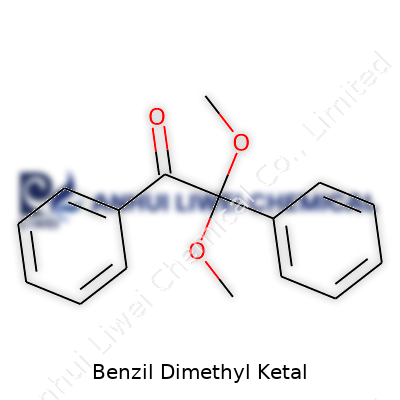
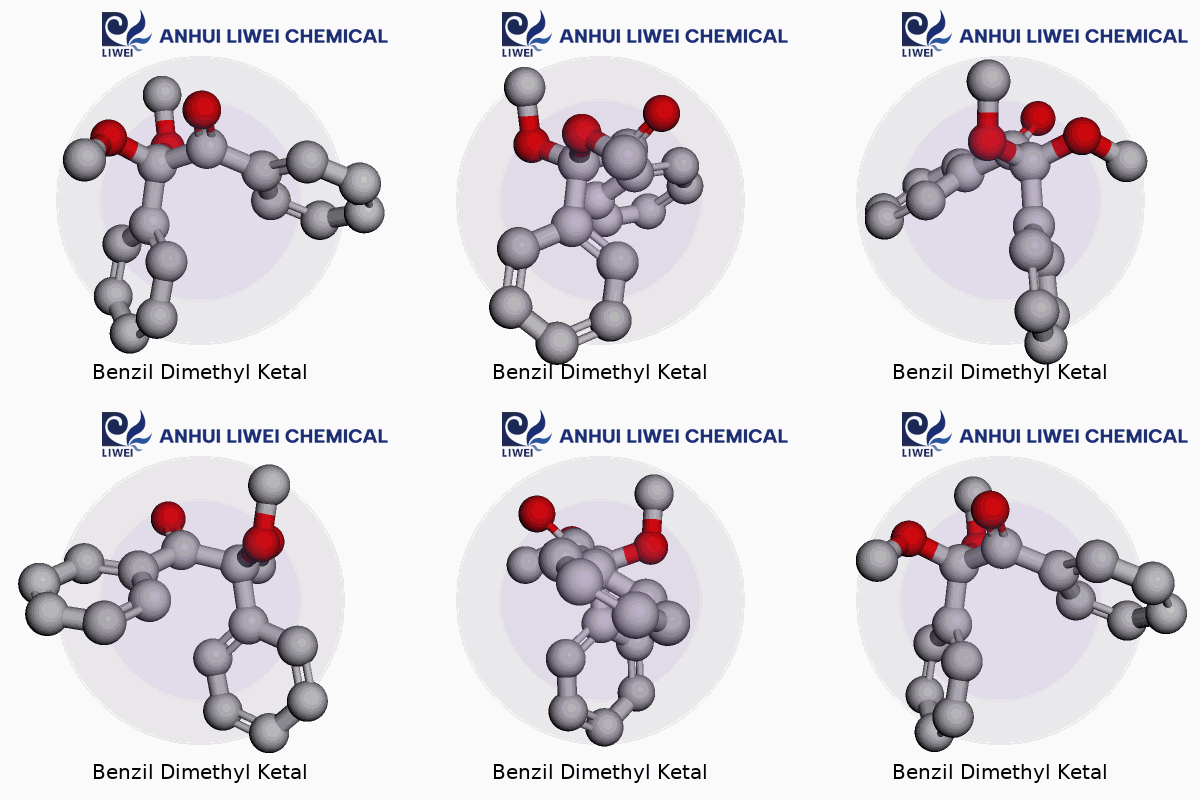
Benzil Dimethyl Ketal: A Real-World Perspective
Historical Development
Interest in benzil dimethyl ketal popped up as industries started experimenting with more complex organic syntheses and looked for photoinitiators that worked at lower costs and higher reliability. Researchers chased after photoinitiators during the 1970s, when polymers and coatings needed tougher materials that could cure under UV light in seconds, not hours. Benzil dimethyl ketal entered the scene as a kind of answer to those practical demands, and pretty quickly found a spot in commercial formulations used by printers, dentists, and makers of specialized plastics. Over time, it beat out older compounds that caused yellowing or left toxic residues in the final products.
Product Overview
Factories and labs recognize benzil dimethyl ketal as a solid or crystalline substance that takes on a yellowish tone. Some professionals have described it as a “workhorse initiator” for industries requiring fast and even curing, so it turns up in inks, adhesives, resins, and dental filling compounds. Chemists found its structure stable enough to handle shipping and storage, so shipping records show it moving all over the globe for use in both mass production and R&D.
Physical & Chemical Properties
Examining the actual substance in my own hands, the first thing that jumps out is its powdery, almost flaky texture, with a melting point close to 66-69°C. It dissolves well in organic solvents such as acetone, ethyl acetate, and toluene. The molecule works best in a UV spectrum range of 300-400 nm, where it quickly breaks down into radical fragments. From what I’ve seen, its reactivity kicks in after the tiniest exposure to the right light, which hooks it as a fast-track ingredient in speed curing. There’s a faint odor, maybe faintly aromatic, but it doesn't usually overpower a lab space unless stored poorly. Its structure remains robust against small temperature swings so storage issues rarely spoil product batches.
Technical Specifications & Labeling
Labels on commercial bottles and bags always include purity figures, which commonly stay above 98%, and warnings about storage away from sunlight, since exposure may degrade the catalyst. Product sheets highlight the molecular formula C17H16O3 and list its CAS number (2440-80-8) for regulatory checks. Suppliers must stick to tightly regulated labeling rules, especially for companies exporting across borders, calling out hazards for skin and eye irritation. Technical papers report a density hovering at 1.18 g/cm³ and a refractive index near 1.56. Good suppliers deliver certificates of analysis showing batch purity, moisture content, and transmission rates for certain UV wavelengths, supporting both compliance and practical formulation work.
Preparation Method
The go-to synthesis pathway starts by mixing benzil with dimethyl sulfate or methyl iodide under dry, carefully controlled conditions. Most labs stick to a base-catalyzed methylation, often choosing potassium carbonate or sodium hydroxide as a facilitator, with the reaction running in an inert solvent like acetone. After heating, separating the product with filtration and solvent extraction clears out byproducts, then the content gets purified—usually by recrystallization from a nonpolar solvent. My own experience says you cannot skimp on washing and drying steps. Even trace water wrecks the end quality, leaving sticky, brown traces where there should be a pale yellow, free-flowing powder.
Chemical Reactions & Modifications
This molecule gets attention for how easily it cracks apart under UV light into benzoyl and methyl radicals. Those fragments set off a chain reaction in acrylic monomers that snaps them together into durable, tough plastics. If needed, chemists can tweak the two methyl groups, swapping out one for bulkier alkyl chains to slow reaction rates or tune compatibility with different resins. There’s also interest in coinitiators that amplify the main photolysis effect, but not all additives play nicely, since some block needed UV rays or gum up the reactive process. Industry sometimes adds stabilizers for shipment and storage, but always aims to avoid slowing the much-wanted photoinitiation.
Synonyms & Product Names
Catalogues, patents, and trade publications reference this compound under various names. Users call it BDK, benzil bis(methyl ketal), or 2,2-Dimethoxy-2-phenylacetophenone. Some suppliers market it under brand names such as Irgacure 651 or Photoinitiator 651. Dentists with hands-on experience know it by trade names on filling kits, while resin manufacturers log it in regulatory sheets by its IUPAC name. The range of traded synonyms shows just how deeply it's worked its way into global chemistry markets.
Safety & Operational Standards
Handle benzil dimethyl ketal carefully in well-ventilated environments, wearing gloves and goggles at the very least. Industry data and safety sheets stress the risk of mild skin or eye irritation. Mixers and machine operators sometimes complain of headaches or mild nausea if fumes build up, so engineers install exhaust hoods in high-volume workspaces. Disposal rules line up with standard organic photoinitiators—no pouring into drains, and always treat as hazardous waste. Regulators in the United States, European Union, and Asia require hazard labelling based on acute toxicity findings, and some major brands voluntarily test for allergenic responses in finished dental and cosmetic products. Firm quality assurance tracks down even tiny catalytic residues, since any leftover initiator in cured products triggers complaints, recalls, or regulatory fines.
Application Area
This material shows up everywhere that quick solidification is needed, such as offset inks, 3D printing resins, adhesives for electronics, or coatings on packaging films. Dental clinics rely on it for setting white fillings where deep and fast curing prevents patient returns for patch jobs. Eyewear manufacturers use BDK to build scratch-proof polymer lenses, while industrial labs employ it in microfluidic chip production and functional films. Some R&D teams, including myself on collaborative projects, compare it with other photoinitiators to squeeze higher efficiency out of laser-powered manufacturing stations. The compound gives off almost no color or odor in the finished cured plastics, a huge upside when final appearance and taste matter—think food packaging or see-through phone cases.
Research & Development
Labs keep searching for photoinitiators that outpace benzil dimethyl ketal, yet the compound keeps re-emerging in patents and project reports because of its predictable behavior and low cost. Material science teams look for modifications that stretch the absorption spectrum closer to visible light, or pair BDK with coinitiators that improve speed under weaker light sources. Environmental chemists experiment with ways to degrade any unreacted initiator after disposal, making sure that the catalyst doesn’t last forever in landfill sites. Regulatory changes in the EU and California push chemists to screen for trace toxins and swap out suspect additives—or develop BDK versions that don’t irritate skin.
Toxicity Research
Existing studies suggest benzil dimethyl ketal breaks down quickly in sunlight or in oxidizing environments, so most toxicologists think the environmental fallout is limited. Researchers have documented that contact can cause mild rashes or eye redness, especially after repeated exposures in poorly ventilated work zones. Animal models show low oral toxicity, but most workplaces avoid letting it build up on benches or hands. Chronic studies continue to watch for issues like endocrine disruption, particularly with photoinitiator traces in food packaging and dental sealants. That's prompted producers to run real-world leaching studies, ensuring patient safety doesn’t get lost in the rush to faster curing.
Future Prospects
Looking ahead, demand for benzil dimethyl ketal may keep climbing as industries turn to more automated, light-driven manufacturing. Sustainability will shape research, focusing on both recyclable packaging and safer synthesis methods that avoid harsh base catalysts or volatile solvents. University groups and corporate labs will push for chemical tweaks that shift activation deeper into the visible spectrum, lowering energy needs and cutting reaction times. Ongoing regulatory scrutiny may drive brands to invest even more in testing and certification, making sure every batch meets both old benchmarks and the needs of safer, greener technologies. Price, performance, and safety—together—will set the pace for where benzil dimethyl ketal lands in markets, classrooms, and the newest corners of advanced manufacturing.
A Closer Look at the Workhorse of Modern UV Curing
Think of Benzil Dimethyl Ketal, often called BDK, as the spark that sets off a chemical chain reaction. It pops up most often in printing shops, dental offices, and factories shaping plastics. BDK makes things harden and set, fast. It does this by kicking off a process chemists call photopolymerization. Shine UV light on BDK mixed into a liquid resin, and you get a finished, solid product in seconds. That’s a big step up from waiting hours or days for traditional methods like air drying.
Printing companies lean on BDK for the quick, clean, and sharp results it delivers on labels and packaging. You can see its value every time you peel a glossy sticker from a new product or admire the raised logo on a box. These fast-drying inks mean more products roll off the line, with fewer mistakes or smudges. My own run-ins with sticky magazine pages or streaked business cards always come down to print jobs that skipped stronger photoinitiators like BDK.
Dentists, Plastics, and the Trust Factor
Walk into a dentist’s office and you’ll see BDK in action. Fillings and dental molds made with light-cured resin all rely on the same basic principle. The UV light hardens what’s soft and shapeless into something durable enough for years of chewing. It’s not just about saving time. Patients want fast treatment, and dental professionals want results they can count on. Studies show that photoinitiators like BDK create dental materials that last.
Manufacturers of electronics and plastics also tap BDK for the speed it brings to the table. High-precision work demands plastics that go from liquid to solid in a snap. LEDs, circuit boards, and smartphone cases often start as liquid mixtures. UV curing with BDK locks in shape and color almost instantly. In a world that expects more in less time, having chemistry like this gives makers a real edge.
Is BDK Safe for People and the Planet?
There’s growing scrutiny on what goes into everyday products. BDK passes most current tests for human and environmental safety when used as directed. Regulators in the U.S. and Europe keep a close watch, setting strict limits on residual chemicals in medical and food packaging. Longer-term studies keep tracking how these substances break down. Consumers want transparency, and that’s fair. Industry insiders push for cleaner chemistry and smarter processes that use less photoinitiator or make it easier to recycle products.
Where Can We Do Better?
Even a solid performer like BDK isn’t perfect. Researchers keep searching for alternatives that work under milder light, leave fewer traces, and break down faster after use. My conversations with lab techs and engineers point to promising leads, especially in the field of plant-based photoinitiators. Factories invest in better ventilation and worker training, so exposure stays far below dangerous thresholds. Ultimately, cleaner chemistry comes from public awareness, tighter rules, and steady investment in alternatives.
The bottom line: Benzil Dimethyl Ketal helps make modern manufacturing, printing, and healthcare faster and more reliable. As demand for speed and performance grows, the job now is to get the benefits without losing sight of health and environmental responsibility.
Understanding Benzil Dimethyl Ketal
Benzil dimethyl ketal pops up in quite a few conversations around UV-curing technology, especially in printing inks and coatings. Folks working in materials science or the manufacturing world run into it during day-to-day problem-solving. Its chemical formula, C17H16O2, packs together seventeen carbons, sixteen hydrogens, and two oxygens. This isn’t just a string of letters and numbers for trivia buffs. The formula reflects how the molecule behaves under UV light and how it helps kick off fast chemical reactions to cure resins or inks.
Why the Formula Matters in Real World Use
Industry cares about exact formulas, since small variations change everything—hardness of a coating, speed of curing, or even safety. A miss at the chemical level can mean a sticky, half-baked product on the production line or a result that can’t survive everyday wear and tear. In my own lab work, formulas like C17H16O2 meant spending less time troubleshooting messy surfaces or uneven drying since reliable compounds cut down on surprises.
In the earlier days printing magazine pages or labels, companies leaned on slow-drying inks. Benzil dimethyl ketal stepped in to help speed things up; its formula works with UV lamps to start a chain reaction, curing material in seconds. Less downtime between jobs means faster production and lower costs.
Safety, Quality, and Environmental Impact
Fast curing isn’t the only reason people pay attention to benzil dimethyl ketal’s formula. Safety matters. Factories once relied more heavily on chemicals that left nasty residues or toxic byproducts. The simplicity and makeup of C17H16O2, when handled properly, cuts down on the risk. It isn’t perfect. Some folks have experienced skin or eye irritation during handling without proper gear. It points out the need for better education on chemical handling and for companies to invest in extraction hoods or gloves. Real stories from the floor matter here—a good workplace routine keeps these risks low.
Environmental headaches don’t vanish just because the chemistry works well in manufacturing. All compounds in the supply chain eventually need disposal plans. Unused resin with benzil dimethyl ketal can't end up in regular trash, for example—it needs separate collection. Manufacturing and waste handling rules encourage everyone to pay closer attention to chemical formulas. A more exact formula means more accurate documentation and safer procedures in labs and plants.
Getting the Most from Benzil Dimethyl Ketal
Lab tests reveal that, with careful formula checks, curing times fall almost in half compared to outdated alternatives. Companies have started switching over to this compound because the formula predicts performance over and over again. Consistency counts in manufacturing lines where lifecycle and product durability show up as warranty claims or happy customers.
Safer handling and smarter disposal come from clear labels and updated training. Information sharing among workers and safety officers makes a difference, especially as new research keeps adding knowledge about long-term health and environmental effects. In short, taking the time to understand formulas like C17H16O2 doesn’t just keep science moving; it keeps products safer and production flowing as well.
A Close Look at Benzil Dimethyl Ketal
Walking through any modern print shop, you’ll catch a hint of chemistry hanging in the air. A big part of that comes from photoinitiators like Benzil Dimethyl Ketal (BDK). Used to cure inks and coatings with UV light, BDK sits right at the intersection of convenience and chemical responsibility. It gets the job done efficiently, but the way folks handle it can make all the difference between safety and risk.
What Happens With BDK Exposure?
You will spot Benzil Dimethyl Ketal as a powder or a pale yellow solid. I’ve handled it during resin work, and always kept gloves handy. Just a single splash can irritate the skin, and those who skip eye protection pay for it quickly. According to reliable safety sheets, BDK aggravates the eyes and respiratory tract. Best to keep ventilation running—work in a stuffy room, and a faint chemical taste creeps in.
More than once, I’ve seen technicians underestimate a chemical because it didn’t give off strong fumes. Yet, persistent skin exposure builds up, and chronic dermatitis isn’t unusual. Good work habits matter, much more than luck. That’s backed up by numerous industrial hygiene case studies: exposure on the skin or in eyes is never just a small injury—it sticks around as persistent redness and lingering irritation.
Safety Tools and Mindset
Latex or nitrile gloves block BDK from seeping into your skin. I remember the extra effort to tape cuffs over glove openings—small leaks turn into big problems fast. Safety goggles should be a fixture, not an afterthought. Splashing is easier than you’d expect, especially when stirring or weighing powder. For anyone pouring bulk BDK, a simple dust mask or a respirator makes the difference. I’ve seen colleagues dismiss masks as overkill. Then one cough later, opinions change.
Fact is, BDK travels invisibly in the workspace. Certain labs run air hoods and keep spill kits in corners. The logic? Spills clean up easily with soap and water if caught early, but dried powder is stubborn and can cause irritation days later. The lesson is to treat cleanup like putting away knives—no shortcuts.
Less Obvious Safety Tips
Standard operating procedures often miss one thing: labeling. Scoops, beakers, brushes—everything needs a tag or a sign. Back in school, a friend mistook a container for sugar and dumped it near his lunch. It stayed a running joke, but the mix-up could have become costly with a more careless crowd.
I’ve come to appreciate training that doesn’t just hand out written rules. Live demonstrations and actual emergency drills stay with people years longer. Watching someone use the eyewash station in real time creates urgency and respect for safe practices.
Research from regulatory bodies like OSHA points out that accidents often come from “routine.” People get familiar, then get lazy. Visual reminders—signs and posters—cut through that complacency and save hands, lungs, and vision.
Building Long-Term Solutions
Good ventilation turns out to be just as valuable as gloves and masks. Installing a simple exhaust fan takes an hour but saves headaches for years. Checklists at the end of a shift prevent forgotten open bottles. Regular audits, not just annual ones, catch bad habits before they settle in.
Staying safe with Benzil Dimethyl Ketal comes down to a personal mix of vigilance and humility. The stories passed down in break rooms matter. Each scar or rash in the shop is a lesson, not just an accident—reminding us all to respect the chemicals that make modern manufacturing possible.
Treating Chemicals with Respect
Benzil dimethyl ketal does a specific job. It helps cure resins under UV light and finds its way into coatings and adhesives. But this compound only does its job well if the bottle stays in the right kind of environment. From my time in labs and storage rooms, I’ve watched more than a few materials spoil or degrade just because folks overlooked a label or kept the bottle near a sunny window.
Why Proper Storage Matters
This compound shows sensitivity to light and moisture. UV initiators like benzil dimethyl ketal can start breaking down long before reaching the production line if left in the wrong spot. Think of a bottle with the lid not fully closed, or a shelf in direct sunlight. Without care, the active ingredient becomes less reliable. Weak or spoiled compounds cause headaches on the job: coatings don’t cure right, or a batch ends up wasted.
Key Factors for Storage
Direct sunlight and excessive UV rays create trouble here. I always kept initiators like this in amber glass bottles, away from any window. That amber-colored glass stops stray light from kicking off reactions before you’re ready. Regular glass fails at keeping those UV rays out. Even with the right container, heat creeps up on you. Warm storerooms speed up chemical changes. Storing benzil dimethyl ketal below 25°C gives you fewer surprises. I used to double-check the thermometer near high-value shelves. If your facility runs hot, climate control gains extra importance.
Moisture gets overlooked far too often. Humidity in the air encourages clumping, reduces shelf life, and invites weird smells—none of which you want while handling chemicals for precise applications. Tight caps make a massive difference. I’ve run across dusty labs where containers sat for weeks, half-sealed and slowly losing their punch. Greasy fingerprints and dust gather around loose lids, leading to contamination with each opening. Even small lapses in safety pile up over time, turning money spent on specialty ingredients into waste.
Personal Experiences and Industry Practice
During my years as a lab technician, the teams that labeled storage zones clearly always ran smoother operations. Clear warnings on shelves—“keep dry,” “store under 25°C,” “protect from light”—reminded everyone to check before grabbing a bottle. In bigger facilities, a chemical inventory system flagged items getting old so nothing overstayed its welcome.
Chemicals ordered in bulk need special care. Splitting large bottles into smaller, tightly sealed containers preserves freshness for the rest of the batch. Some colleagues kept a logbook near sensitive compounds, jotting the date each bottle opened. That simple habit let us catch problems early and prevent headaches during quality checks.
Building Better Habits
Hazards multiply for those skipping basic storage precautions. Benzil dimethyl ketal has its hazards, including health risks from skin and eye exposure. A clean, cool, and dry chemical store protects not just product quality but the people handling it.
Shops with tight schedules or small budgets sometimes treat storage guidance as optional. Experience tells a different story. Lost batches, unexpected downtime, and unnecessary expenses come from overlooking simple storage conditions. Using purpose-built cabinets and training staff on label warnings tightens up operations and slashes avoidable risks.
Safe storage shows up as good habits repeated every day. Benzil dimethyl ketal rewards those who respect its quirks, turning careful handling into reliable outcomes. Keeping it cool, protected from light, and tightly sealed might not grab headlines, but in my experience, these steps make all the difference for anyone counting on consistent results.
Understanding the Real World of Chemical Supply
You won’t see Benzil Dimethyl Ketal (BDK) popping up in your local store. This chemical, used mostly in UV-curable formulations, coatings, and inks, isn’t something folks keep under the kitchen sink. Distributors and labs know that what matters most is safe handling and practicality, so packaging gets careful attention — and not just for safety, but for keeping the product good for as long as possible.
What Packaging Looks Like in Everyday Labs
BDK usually arrives in high-density polyethylene or amber glass bottles, sometimes even lined metal cans for bigger shipments. The darker glass or opaque plastics block out light, which helps prevent the compound from breaking down before it’s ever used. Most labs I’ve seen go straight for the tightly sealed, tamper-evident containers. A clear seal gives confidence that the chemical hasn't been compromised between the factory and the workbench.
The product labels combine technical info and serious warnings. You’ll spot the batch number, lot code, date of manufacture, and recommended storage temperature alongside hazard pictograms. Mistakes with chemicals don’t care about experience levels; labeling and packaging do half the safety job before anyone pops the cap.
Quantities and the Needs of Different Users
BDK isn’t just a lab-only item. In industrial setups, barrels or drums make sense—think 20 kg, 25 kg, or even higher. For research or university students, you’re looking at 100-gram or 500-gram bottles, measured out for specific projects. There’s a stark price difference between ordering ten kilos in a drum versus 50 grams in a bottle. Small packs cost more per gram, mainly for quality-control and packaging overhead, but many research budgets breathe easier spreading that risk.
Some manufacturers offer sachet-like packaging with single-use intended, keeping cross-contamination low. In the research world, waste matters—not only from a budgeting angle, but environmentally as well. More and more suppliers started rolling out recycled materials and returnable containers, responding to tighter regulations and rising demand for greener approaches.
Challenges With Transport and Storage
I’ve seen more than one researcher lose whole batches because something got too warm in storage or transit. BDK’s stability ties directly to how it’s kept. That amber glass protects not only from sunlight, but also from temperature swings. Manufacturers recommend storage away from sources of ignition, in a dry place with good ventilation, between 2 and 8°C. In big facilities, climate-controlled stockrooms are standard. Smaller players lean on foam-insulated shipping boxes and overnight couriers for any sensitive chemical like this one.
Any packaging that resists leaks, blocks UV, and makes accidental exposure less likely pays for itself. Even with all the training, all the hazard icons, one careless opening or spill could spark a serious situation. It proves that good packaging does more than meet a checklist — it keeps people and projects safe day after day.
Moving Towards Smarter Packaging
Some companies experiment with QR-coded labels linking to digital safety sheets, offering immediate guidance. Others streamline bottle shapes for easier pouring and allotted space in storage cabinets. From experience, the simplest solution often works best: an unbroken seal, a sturdy cap, and a bottle that doesn’t shatter if dropped.
BDK’s future in packaging looks set to blend tech and common sense. With every improvement, scientists get more time focusing on their experiments and less on package mishaps. In this field, that can be the difference between success and setback.