Benzophenone: A Comprehensive Commentary
Historical Development
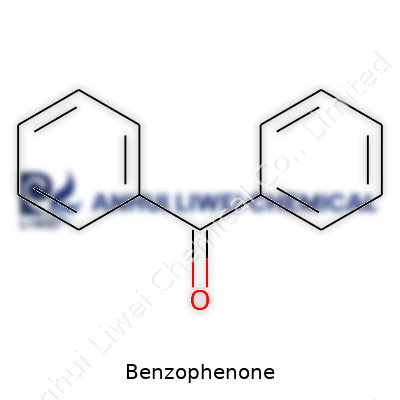
Benzophenone surfaced in the late 1800s, back when organic chemists first began uncovering the wonders of aromatic chemistry. As factories picked up steam and dyes took over clothing production, the need for light-stable chemicals got urgent. Benzophenone offered a solution because it keeps materials from yellowing or degrading under UV. In the mid-20th century, plastics and consumer goods needed greater protection, prompting more commercial production of this compound. Scientists realized early on that its structure—two benzene rings joined by a carbonyl group—brought sturdy resistance to sunlight and oxidation to everything from industrial coatings to perfumes. More than a century of steady use means industrial know-how has grown right alongside advances in organic chemistry and plastics manufacturing.
Product Overview
Benzophenone goes by many names—diphenyl ketone and phenyl ketone show up on technical sheets and warehouse bins just as often. The bulk material comes as a white powder or pale yellow crystals, with a faint, pleasant aroma that reminds some chemists of geraniums. This seemingly simple powder gets packed up in everything from fifty-kilogram drums for big players to small, carefully labeled bottles for research labs. Its value comes from remarkable versatility. Paints stay bright, food packaging avoids spoilage, and cosmetics get reliable sun shielding thanks to its chemical backbone. Even years after first hitting the shelves, suppliers rely on the classical forms—the same stuff that launched generations of industrial chemistry solutions.
Physical & Chemical Properties
Looking at benzophenone on the lab bench, it melts at about 49 degrees Celsius, boiling off at a sturdy 305 degrees. Water won't really dissolve it, but it breaks up just fine in plenty of organic solvents: ethanol, ether, and chloroform all do the trick. Its molecular formula, C13H10O, highlights the balance between the rigid aromatic groups and a relatively reactive ketone function. Benzophenone absorbs ultraviolet light beginning right in the UV-A and UV-B range, which gives it its staying power as a sunscreen ingredient. Under standard conditions, it holds up against oxidation and decomposition, so products with benzophenone stick around for a good long time, whether in storage or on a supermarket shelf.
Technical Specifications & Labeling
Buyers expect clear labeling on every shipment. Purity levels matter; industrial buyers typically order 99% minimum, but pharma grade requires tighter screening for trace contaminants. CAS number 119-61-9 keeps things consistent in logistics and research. Material safety data sheets go out with every container, warning handlers about dust hazards and possible skin or respiratory irritation. Certificates of analysis list melting points, refractive index, and purity, along with packing details. Stock codes for benzophenone have to stay unambiguous because regulations on photoinitiators change as food safety guidelines shift and new research crops up linking the chemical to health and environmental effects.
Preparation Method
Benzophenone production leans heavily on the benzoylation of benzene, with the Friedel-Crafts acylation process filling most of the world’s demand. Toss benzene and benzoyl chloride into a reactor, sprinkle in anhydrous aluminum chloride, and you end up with benzophenone after the exotherm dies down. Industrial plants recycle solvents, manage heat, and deal with substantial hydrochloric acid byproducts, but the process itself stands as one of the old workhorses of aromatic chemistry. Smaller lab syntheses turn to potassium ferricyanide oxidations or Grignard reactions, depending on which reagents are on hand.
Chemical Reactions & Modifications
Benzophenone shows flexibility in chemical transformations. Ultraviolet light knocks it into its excited triplet state, making it a strong photoinitiator in radical polymerizations. Chemists put it to work forming photostabilizers, using its structure as a jumping-off point for more complex molecules. It reacts with alcohols, amines, and thiols under reducing or nucleophilic conditions, yielding benzpinacol, benzhydrol, or differently substituted ketones. Scientists attach a variety of functional groups to the aromatic rings, making analogues like oxybenzone and 4,4’-dihydroxybenzophenone. These offshoots find themselves in everything from UV absorbers in plastics to specialty photoinitiators in dental resins.
Synonyms & Product Names
Industry catalogues list benzophenone under a slew of synonyms: diphenyl ketone, phenyl ketone, or benzoylbenzene, to name a few. Commercial blends take distinct names if used as UV filters or stabilizers in plastics, with versions like “UVINUL 50” or “Escalol 535” showing up in ingredient lists on packaging. In sunscreen circuits, labeling sticks to International Nomenclature of Cosmetic Ingredients (INCI) regulations. In industrial supply bins or lab stockrooms, its standard name and CAS number keep procurement and record-keeping transparent.
Safety & Operational Standards
Daily handling of benzophenone demands respect for its ability to cause irritation to skin and lungs. Factories and labs use ventilation, gloves, and face protection. Dust control stands central, as airborne particles cause discomfort and, with chronic exposure, potential allergic reactions. Storage recommendations place drums away from strong oxiders and sunlight. Regulatory pressure has grown as research expands on migration into food products, leading food authorities in some regions to set strict migration limits or advise against certain packaging uses. Worker training covers not just daily hazards but also spill cleanup and long-term monitoring for chronic effects. Anyone involved in bulk shipment or storage knows that a little extra attention to housekeeping keeps the plant running trouble-free.
Application Area
Benzophenone’s applications run wide. Printing presses rely on it as a photoinitiator for inks and coatings that cure instantly under UV light, boosting productivity and lowering energy bills. Plastics, especially those bound for outdoor applications, use benzophenone-based UV absorbers to stretch their service life by years. In food packaging, it functions as a barrier, holding back spoilage caused by sunlight, though consumer pressure and changing regulation prompt manufacturers to watch migration levels closely. Personal care products, from sunscreens to hair sprays and nail polishes, benefit from its ability to scatter harmful light. Small-scale perfumers rely on it as a fixative, holding scents in place so finished products linger on skin. Electronics and adhesive industries use benzophenone derivatives to initiate polymer network formation, creating toughened components for smartphones and fiber optics.
Research & Development
Research continues to push benzophenone’s capabilities. Universities and chemical companies look for new derivatives that filter light more efficiently, remain stable under heat, or break down more easily in the environment. Analytical chemists develop faster, more sensitive methods for detecting trace amounts in complex food matrices, responding to the need for better quality control as per new food safety legislation. Academia investigates green synthesis routes, reducing reliance on hazardous catalysts or finding ways to recycle byproducts back into the production loop. In pharmaceuticals, benzophenone moieties anchor new drug molecules, opening pathways for light-activated therapies. The knowledge base ramps up year after year, with conferences and peer-reviewed journals reporting the latest tweaks to catalytic efficiency, toxicological profiles, and sensory impacts in flavor and fragrance chemistry.
Toxicity Research
Mounting evidence links chronic benzophenone exposure to a variety of health effects. Rodent tests show possible links to liver and kidney changes, with doses much higher than humans regularly encounter. Scientists dig deeper into the mechanism, exploring benzhydrol metabolites and their ability to interact with hormone receptors. A 2021 review from the European Food Safety Authority flagged gaps in chronic toxicity data but reaffirmed the need to keep dietary exposure as low as possible. US and EU agencies track levels in water, air, and foods packed with printed ink or plastic wrapping. Debate remains on what counts as truly “safe,” so authorities continue to update guidelines as fresh evidence emerges. Consumers grow more aware, spurred by reports linking benzophenone derivatives in sunscreens to hormone disruption and coral reef bleaching. With public opinion shifting, companies have reason to minimize or reformulate whenever alternatives check both safety and technical boxes.
Future Prospects
Looking forward, benzophenone’s position should see gradual shifts. Stricter environmental and food-contact regulations push manufacturers to develop lower migration formulations or seek new stabilizers from natural sources. The trend toward “clean label” products in both food and cosmetics exerts pressure to cut synthetic UV absorbers in favor of plant-based replacements. Nonetheless, the robust performance and low cost of benzophenone keeps it in the roster of materials for coatings, industrial processes, and niche technical solutions, especially where alternatives struggle to match the same standard for UV protection. Synthetic chemists keep probing new molecular tweaks that build in safe breakdown or photostability, ensuring future blends serve their protective roles while keeping pace with tightening standards.
Everyday Chemistry in Unlikely Places
Walk down any drugstore aisle and you’ll find benzophenone, though you won’t see it written in bold letters. This chemical pops up in familiar products: sunscreens, perfumes, plastics, even some foods. Chemically, it falls under the group of aromatic ketones, known for their ability to absorb ultraviolet light. The point is not just its presence but what it does behind the scenes for both products and people.
Blocking the Sun, Protecting Our Stuff
Benzophenone’s strength lies in its role as a UV filter. Sunscreens containing this compound work by soaking up damaging rays, defending skin against burns and slowing long-term sun damage. But it doesn’t stop there. The same light-absorbing trick gets used in packaging to keep food, cosmetics, and even dyes from spoiling or fading under store lights or sunlight. For me, who’s lost a good shirt to sun-bleached lines on a clothesline, the value of chemical sun blockers in dyes and plastics feels personal. They make plastic containers, soda bottles, and wrappers last longer and keep colors from washing out too soon.
Why Some Makers Depend on Benzophenone
Chemical companies and manufacturers look to benzophenone for its reliability and cost efficiency. It melts at a temperature that fits standard melting and molding setups. Its molecular structure locks in UV shield properties. Large suppliers ship tons every year to factories crafting everything from prescription glasses to garden furniture. In printing, it fixes ink faster, so comic books and cereal boxes keep that crisp, colorful look.
The Health Questions No One Wants to Ignore
The story changes a bit once we look at how benzophenone behaves in the body and the environment. Animal research stirred concerns about cancer risk, and the US National Toxicology Program labeled it as “reasonably anticipated to be a human carcinogen” after high-dose rodent studies. It shows up in water supplies after washing off beach-goers and outdoor swimmers. Some studies link certain forms, like benzophenone-3, to possible hormone disruption and skin irritation, sparking debates about its place in sunscreens and everyday products.
What Could Come Next?
Rules now limit benzophenone levels in cosmetics and foods across much of Europe and North America. Producers face pressure to invest in safer or more naturally-sourced UV filters. Consumers want clearer labeling and more research on long-term risks. As a parent, concerns about what sinks into my kids’ skin mean checking ingredient lists and choosing mineral alternatives when I can. Public health leaders push for ongoing study—not just of benzophenone, but of everything we wipe on, spray into, or store our food inside. We need fresh research that looks at real-life exposure, not just lab results.
Making Informed Choices
The bottom line is simple: benzophenone’s role matters, but blind trust no longer cuts it. Science, business, and people’s daily habits all shape how much of it we encounter. For now, paying attention, asking questions, and supporting smart regulation go further than ignoring the fine print. This approach turns sunscreen, shampoo, and even a milk bottle on the shelf into something worth thinking about—not just something to toss in the cart and forget.
What Actually Is Benzophenone?
Benzophenone shows up in plenty of sunscreens, lotions, lip balms, and even some fragrances. Its main job is to filter out UV light, keeping products stable and colors from fading before their time. Walk down the personal care aisle, and ingredient lists often read like a chemistry textbook. The trick is figuring out which names spell trouble, and which just sound scary. Benzophenone sometimes falls into both categories.
Why Are People Worried?
Over the past few years, researchers got louder about the potential risks linked with benzophenone and its chemical cousins. Animal studies flagged concerns about hormone disruption, since benzophenone can mimic estrogen—a hormone that affects lots of body functions. In those studies, certain hormone levels changed, and some lab animals grew tumors after chronic exposure. Human skin doesn’t soak in chemicals at the same rate as study animals, but that doesn’t erase the question: is any exposure something people want every day?
Dermatologists see all kinds of skin reactions from products loaded with synthetic UV filters. Some of these reactions include rashes or swelling, especially in folks with skin already on the sensitive side. Even with “safe” ratings from organizations like the FDA for certain uses and concentrations, science keeps moving. In the European Union, for example, benzophenone faces tighter usage limits. The California Prop 65 list includes it as a chemical known to cause cancer.
How Much Gets Into the Body?
Most people figure if something goes on top of skin, it mostly stays there. With benzophenone, research tells a different story. Studies show measurable traces of benzophenone in blood and urine samples after regular sunscreen use—sometimes within days. Absorption levels vary, but anyone using a broad mix of personal care products every day probably gets exposed through multiple channels. Even though the amounts are much lower than animal testing, the question keeps coming back: does low-level, frequent exposure stay harmless over years?
The Retailer’s Response
Big retailers and beauty brands track this research too. In recent years, many stores swapped out benzophenone-based sunscreens for options using zinc oxide or titanium dioxide, which are seen as safer bets. Clean beauty brands often skip benzophenone altogether, marketing “reef-safe,” “non-toxic,” or “hormone-safe” on their packaging. The public is paying more attention. Shoppers now scroll through ingredient lists with one eye on apps and another on potential health risks.
Where Do We Go From Here?
Some folks swear by using mineral sunscreens and fragrance-free lotions to avoid benzophenone and similar synthetic chemicals. Anyone with sensitive skin, or anyone wanting to lower possible hormone disruptors, can stick to products free from benzophenone. Brands have more options than ever for stable, UV-resistant formulas. Keeping track of evolving research and swapping out questionable chemicals has become a badge of trust for companies targeting health-conscious shoppers.
Using my own curiosity as a guide, I dig through published studies and follow discussions among doctors. Transparency from brands helps too. No cream or lotion gets a permanent free pass—if new research casts doubt, people deserve clear information and safer choices. As knowledge grows, so does the expectation that companies prove products support long-term health.
What is Benzophenone and Where Do Folks Run Into It?
Benzophenone shows up in more places than most people realize. This chemical gives plastics and paints a longer shelf life, and helps keep our food looking fresh in packaging. Even personal care items like sunscreens and lotions sometimes rely on it because it blocks UV rays. I used to toss sunscreen in my backpack without a second thought until I learned more about chemicals inside these products. Turns out, checking labels can matter a lot.
Why Should We Worry About Benzophenone in Everyday Life?
Researchers raise eyebrows about benzophenone for a few reasons. Studies have linked higher levels of exposure to possible risks such as hormone disruption. Some evidence shows it can mimic estrogen in the body, which brings all sorts of problems, especially for children. Possible effects range from early onset of puberty to issues with thyroid function. The body can only handle so much interference before things begin to go sideways.
Usually, exposure happens through food packaging. Grabbing a snack wrapped in brightly printed plastic or foil might not look dangerous, but trace levels of benzophenone can leach into food. Ingesting these chemicals over months and years can cause them to build up in the body. The skin isn’t much of a barrier, either. I found out that just using a lotion or cologne with benzophenone gives it a direct path into your system. Over time, the risks pile up, even if no single product delivers a toxic dose all at once.
What Does the Science Say?
Scientists have linked benzophenone to possible kidney and liver issues in animal studies. In 2014, the European Food Safety Authority reported that high intake could impact the liver and lead to carcinogenic effects. That’s a big flag for safety. In the U.S., the Food and Drug Administration flagged benzophenone as a possible cancer risk years ago and doesn’t allow it as a food additive anymore. The World Health Organization classified it as a possible human carcinogen based on lab data, though real-world risk levels still get debated.
My own interest in science led me to see that even small health risks add up if people get exposed to a chemical all their lives. Small steps matter, especially for people with developing bodies or weaker immune systems. Young children absorb chemicals at a higher rate and don’t clear them out as quickly. The stakes feel even higher for families. We don’t always know which products bring the greatest risk, so it makes sense to pay attention when science shifts or regulations change.
What Can Be Done to Limit Risk?
Cutting down on benzophenone exposure starts with small habits. Swapping out plastic food packaging for glass or metal keeps chemicals from seeping in. Reading product labels and avoiding sunscreens with questionable ingredients brings some peace of mind. Natural alternatives don’t always work the same but skipping certain chemicals is worth it for many folks. People can also speak up about product safety and ask brands for more transparency.
Policy changes have already begun in some areas, like California, where food packaging rules are getting tighter. Other countries set limits that challenge manufacturers to go with safer chemicals. Real progress needs teamwork—scientists, lawmakers, and consumers all play a part. My hope is for more awareness and better choices, so fewer families have to worry about invisible threats in everyday life.
Unpacking the Impact of Benzophenone
Walking through the aisles of any supermarket, benzophenone hides in places we rarely suspect—sunscreens, scented candles, packaged foods, and cosmetics. It’s there as a UV blocker and a stabilizer, quietly doing a job most of us never even think about. Years ago, I’d slather on sunscreen before a beach trip, feeling proud for protecting my skin. No one told me I might be leaving traces of something that could trouble ocean life long after my vacation ended.
What Science Tells Us
Benzophenone doesn’t just wash away; it finds its way into waterways and soil. Research published by the US National Library of Medicine points to its detection in rivers and lakes. Once in aquatic systems, fish and amphibians can absorb it. Evidence from environmental toxicology journals highlights that even low levels of benzophenone can interfere with the hormones of fish and amphibians, disrupting reproductive cycles and behavior.
The problem doesn’t stop there. Investigations from the Environmental Protection Agency show that benzophenone can break down into other compounds—some even more persistent or toxic. Plants that take up water from contaminated soil might absorb benzophenone, and in turn, animals higher up the food chain receive a dose they never bargained for.
What People are Seeing on the Ground
I’ve spoken with a few folks who live by rivers downstream from big cities. They talk about algae blooms and fish die-offs, and while multiple chemicals play a role, benzophenone often shows up in water tests. Environmental groups along the California coast keep pushing for studies and public information on these chemicals, saying beachgoers and boaters share responsibility for paying attention to what washes off into fragile habitats.
Researchers from American universities have pointed out that wastewater treatment plants struggle to filter out all the benzophenone flowing in. That means trace amounts pass straight through into rivers or into the sludge that gets used as fertilizer in farming.
Why It Matters to Everyone
Environmental safety isn’t an abstract goal. It shapes food security, the health of children swimming in lakes, and the integrity of the water pouring out of kitchen taps. Calls for more transparency in ingredient lists come from both advocacy groups and conscientious businesses. Many customers feel that if there’s even a slim chance for a chemical to build up in food chains or harm marine life, it deserves more scrutiny.
Beyond personal health, benzophenone’s story reflects the bigger truth: modern convenience often brings invisible trade-offs. Avoiding benzophenone—or any persistent chemical—calls for changes not just by individuals but by industry giants and lawmakers. Bans on certain UV filters have worked in places like Hawaii, where coral reefs are a vital part of the ecosystem. Other regions might look to this example, weighing their own needs and risks.
Leadership and Solutions
From my own kitchen to local community meetings, action starts with asking questions and digging for answers. Swapping out certain personal care products, choosing packaging with verified safer options, and pressing for regulations that set real limits on harmful chemicals can help. Industry innovation has already produced effective alternatives for many uses once dominated by benzophenone. Supporting these options sends a message that safe and sustainable products are a priority.
Protecting the environment comes down to the choices we make, whether stocking shelves or setting rules. Benzophenone may be a familiar tool in manufacturing, but its costs stretch far beyond the factory. As more research surfaces, every step toward safer alternatives and clearer labeling marks progress for people and the planet.
Where Does Benzophenone Show Up?
Benzophenone makes its way into more products than most people realize. I started spotting it a few years ago when I got into reading ingredient lists, and it surprised me just how often it appeared. You’ll run into this chemical in some sunscreens, cosmetics, certain plastics, and even a handful of foods and drinks.
Sunscreen gets mentioned a lot because benzophenone helps absorb harmful UV rays, helping to protect skin during long days outdoors. That job sounds helpful, but questions have popped up over how healthy it is to slather it on all summer, year after year. I took a bottle out of my bag today and checked—sure enough, there it sat. Reading more, I realized this filter also finds its way into makeup: think foundation, nail polish, and lipstick. On some labels, you might find it listed as BP or Benzophenone-3, and its main talent—blocking UV—makes cosmetics less likely to degrade on the shelf or on your face.
If you look closely at some plastic packaging (like water bottles or food containers), the story doesn’t get much better. Manufacturers add benzophenone to help keep plastics from turning yellow in sunlight and stopping their contents from spoiling too fast. I’ve learned that, in rare cases, it creeps into foods as an unintentional contaminant when it leaches from ink or plastic coatings.
Why Use Benzophenone At All?
Its talent for stability sets it apart—products last longer, look better, and resist sun damage. Makeup keeps its color. Sunscreen stays strong. Plastics don’t fall apart. These benefits sound good at first glance, but I like to know what I’m putting on my skin or tossing into my recycling bin.
Over the past five years, benzophenone has started showing up in discussions around health risks. Some studies tie it to hormone disruption and possible links to cancer—nothing conclusive, but the whispers keep getting louder. In 2021, California flagged benzophenone as a chemical known to cause cancer after animal studies pointed in that direction. Europe has taken action too, restricting its use in some consumer goods. The FDA in the US still permits small amounts in trace cases, which can include flavors for baked goods and candies, but public pressure is pushing for more transparency and tighter rules.
What Can We Do?
Reading labels counts. It became a habit for me after a friend’s advice during a grocery run. If you see benzophenone or its cousins (like oxybenzone), consider skipping that product. More makers now offer sunscreens and cosmetics without it, using mineral filters like zinc oxide that don’t raise the same health flags. Switching to glass or metal for food containers nudges benzophenone out of the kitchen, too.
Consumer awareness drives change. Companies answer with safer ingredients when enough people ask. Stricter oversight from governments would help—long-term testing and clearer labeling can protect buyers and send a message that safety matters more than shelf life. Until then, knowing what to look out for tops the list. Watching for benzophenone helps cut down on risk, shifting demand toward choices that put health ahead of a longer expiration date.