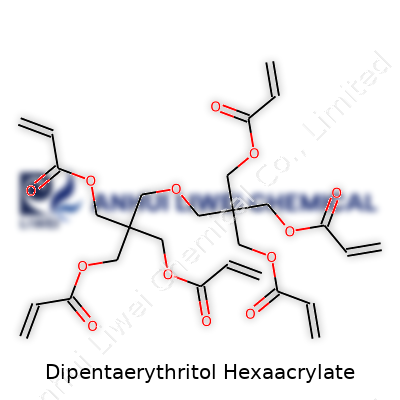
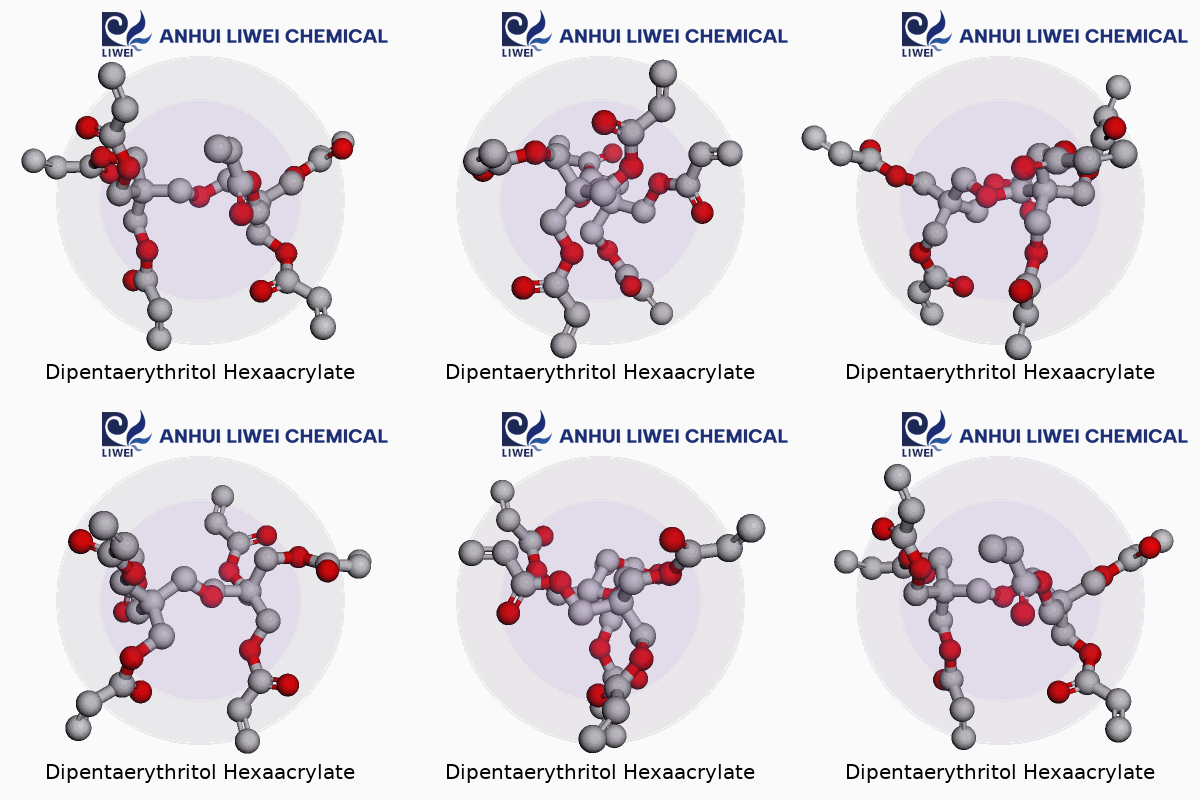
Dipentaerythritol Hexaacrylate: Looking Beyond the Acronym Soup
Historical Development
Dipentaerythritol hexaacrylate entered the industrial world through a series of accidental discoveries and purposeful tweaks to acrylate chemistry. Early researchers pushed the boundaries of polyol production, hunting for molecules packed with enough reactive sites to boost the performance of surface coatings, adhesives, and high-performance plastics. Decades back, inventive chemists turned the spotlight on dipentaerythritol, a molecule bursting with six functional acrylate groups. Adding acrylate esters wasn’t just a quest for novelty—those seeking faster curing times, better hardness, and durability steered development, especially after the mid-twentieth century ushered in a demand for lightweight and tough synthetic materials. Paint labs, print shops, and electronics assembly lines all found their gear shifting up a notch with the arrival of hexaacrylate.
Product Overview
Dipentaerythritol hexaacrylate stands out from the crowd for its sheer functionality. Essentially, it delivers high crosslinking density—improving the mechanical strength and stability of all sorts of resin-based products. It flows as a clear, viscous liquid, making it easy to dose and blend into various resin systems. It’s a favorite in UV and electron-beam cured coatings since its multiple acrylate groups let manufacturers develop tougher finishes that resist scratching, yellowing, and chemical attack. Hard-wearing floors, automotive headlights, and even smartphone screens see the benefit of this molecule’s backbone almost every day.
Physical & Chemical Properties
This hexaacrylate struts a molecular formula of C27H38O12, and its six acrylate moieties give it a hefty molecular weight and a high viscosity. It’s colorless and nearly odorless, a relief for anyone who’s spent time with sharper-smelling chemicals. Its flash point sits on the higher end—it doesn’t catch fire easily, but once ignited, it burns rapidly. In my own experience, its low volatility makes handling simpler, though gloves are a must, as skin sensitization can occur even after short exposure. The material dissolves easily in most organic solvents, integrating seamlessly into resin matrices. Its shelf-stable when stored in the dark at room temperature, though like most acrylates, it reacts if left open to the air for extended periods thanks to polymerization triggers like light or traces of peroxide.
Technical Specifications & Labeling
Manufacturers usually rate its purity above 95%, and the label highlights not just the content but relevant hazard symbols given its toxicity and reactivity. Each container boasts the UN number and manufacturer’s batch, since traceability matters in this field. Specific gravity ranges between 1.20 and 1.30, and the acid number is closely watched—too high, and the acrylate groups may have started to break down, affecting both reactivity and clarity of finished products. Technical data sheets go beyond chemical composition—they include flash point data, reactivity warnings, recommended storage temperatures, and details about incompatibilities with strong oxidizers or amines.
Preparation Method
Production starts with acid-catalyzed esterification, taking dipentaerythritol and treating it with acrylic acid in the presence of polymerization inhibitors like hydroquinone. It’s a batch process: manufacturers heat, stir, and remove water to drive the reaction forward. Once it’s over, purification happens by washing out unreacted acrylic acid and drying the mixture, yielding a viscous monomer ready for endless creative uses. Small shifts in temperature, pressure, or feed ratio can mean a noticeable difference in viscosity or free acid content—a problem I remember facing during my first foray into scale-up chemistry. If the water isn’t stripped quickly enough, unwanted side reactions or partial acrylation can limit downstream performance.
Chemical Reactions & Modifications
The fun and challenge with hexaacrylate chemistry come from its six reactive sites, which snap up free radicals and form dense crosslinked networks almost instantly under UV light or in the presence of radical initiators like benzoyl peroxide. Mix it with other acrylates or urethane monomers, and it brings rigidity, cure speed, and resistance to tough environments. Specialty labs sometimes cap acrylate ends with other reactive groups for further tuning—epoxy or silane modifications, for instance, increase water resistance or adhesion to glass and metal. Advanced applications look toward hybrid resins, where hexaacrylate interacts with nanoparticles or bio-based monomers to ramp up performance without losing the essential qualities that made the molecule popular in the first place.
Synonyms & Product Names
In catalogs, it shows up as DPEHA, dipentaerythritol hexaacrylate, or even longer chemical names that only a synthetic chemist would write on a whiteboard. Commercial blends might tack on company codes or letters for custom formulations, but the core molecule always features those six bustling acrylate groups. Major players market it under product lines that emphasize either purity or specific modifications, aiming at either high-reliability electronics or art-grade coatings. Knowing these aliases keeps procurement simple and ensures the right grade ends up in the right drum—one misstep here led to a product recall I saw years ago.
Safety & Operational Standards
This material demands respect in the workplace. Direct contact without gloves often results in skin rashes, and long-term exposure increases the chance for chemical allergies. The runny liquid needs eyewear and fume hoods, as fumes—though mild—can sensitize lungs over time. Emergency showers, clear hazard signage, and staff training remain non-negotiable. According to OSHA and EU REACH standards, regular safety audits, spill response plans, and firsthand drills are the norm around facilities handling these monomers. Extra care goes to storage—tightly sealed containers, away from sunlight and heat, and definitely not near oxidizing agents or amines that might set off unwanted reactions.
Application Area
Industries dealing in inks, paints, and adhesives rely on dipentaerythritol hexaacrylate to deliver fast-curing, glossy, and durable products. Printers running at high speed use UV-curable inks containing this ingredient, giving sharp, smudge-free images on packaging that stands up to shipping rough-and-tumble. Optical fibers, circuit boards, and specialty adhesives in cars or medical devices owe their steadfast performance to this monomer’s crosslinking ability. Floor coatings slathered in garages and factories use the compound’s chemical resistance to repel oil, salt, and spilled coffee. Even in dental repair, a small amount of DPEHA ensures restorations last longer under chewing and exposure to hot drinks.
Research & Development
Ongoing R&D looks for ways to make the resin greener, faster-curing, and less toxic. Academic papers pile up on bio-based hexaacrylates, aiming to swap petrochemicals for renewable feedstocks without sacrificing performance. Labs are experimenting with new initiators to improve curing speed under environmentally friendly LED UV lamps. Research budgets also fuel the quest to lower emissions during processing, since even low-odor compounds can build up to hazardous levels in poorly ventilated spaces. Nanotechnology combines with DPEHA to reinforce coatings at the molecular scale, creating composite films that laugh off abrasion and chemical spills. The push here isn’t just for performance—it’s for cutting waste, energy, and production time.
Toxicity Research
Animal studies and lab tests show some cause for concern—the monomer behaves like many acrylates, producing irritation and sometimes allergic response in repeated tests. Regulatory reports show repeated exposure can sensitize skin and lungs. The molecule isn’t considered a human carcinogen, but long-term safety demands good practices and protective equipment. Wastewater from cleaning out mixers and reactors carries acrylate residues, and strict discharge permits hold companies accountable for removing or neutralizing leftover monomer before water leaves the plant. Research continues on degradation pathways, potential effects on aquatic life, and workable options for recycling or treating spent resins.
Future Prospects
Demand for tough, light, and long-lasting polymers drives companies to refine dipentaerythritol hexaacrylate both in the lab and on the production floor. The molecule’s six acrylates remain a rare and prized tool for engineers, especially as the world rethinks its dependence on fossil-based materials. The next wave likely comes from hybrid resins blending hexaacrylate with plant-based sources or nanomaterials, giving end-products a smaller ecological footprint without dropping standards. Advances in safe handling, recycling, or upcycling both the monomer and finished materials open doors for broader adoption in markets where chemical safety and sustainability already lead purchasing decisions. Smart use of this chemistry calls for real teamwork—builders, chemists, and regulators walking together, one well-sealed drum and hardened floor at a time.
What Exactly Is Dipentaerythritol Hexaacrylate?
Dipentaerythritol hexaacrylate probably sounds more like a tongue-twister than something people use in everyday products. This chemical, with a name that sprawls across the page, is quite a workhorse in manufacturing—though most folks never hear about it. It’s a specialty acrylate, packed with reactive sites, which makes it a solid choice for things that need to last or stay put. If you’ve ever used a phone with a scratch-resistant screen or set foot on a glossy, hard surface floor, chances are pretty good you’ve crossed paths with a product made using this compound.
Where Does Dipentaerythritol Hexaacrylate Show Up?
One clear example sits in the world of coatings. This stuff helps make tough coatings for electronics, car interiors, and even those resilient labels that don’t fade away. Manufacturers look for coatings that cure quickly and cling to surfaces. Ultraviolet (UV) curing grabs the spotlight here. The more reactive the ingredient, the tougher and faster the cure. From experience working on a team that developed UV-cured adhesives, nothing beat watching a sticky, glossy mass turn into a rock-solid finish under a bright lamp. Dipentaerythritol hexaacrylate almost always played a key role in that transformation because its multiple acrylate groups speed along the polymerization process.
Printing inks rely on this material, too. Printers want to avoid long waits for ink to dry or see smudges wreck a job. This chemical gives ink the kick needed to cure on command without losing gloss or clarity. I remember a trade show demo for a company’s new digital printer. Their pitch? Ink dried in seconds, not minutes, so the brochures handed out right off the press stayed sharp and clean. The secret—tucked inside the ink formulations—was a blend of quick-reacting components, including dipentaerythritol hexaacrylate.
Why Does Its Use Matter?
Here’s where this story turns more serious. A compound like this packs a punch in chemical and physical performance, but it doesn’t do so without raising questions. High reactivity in chemistry can also mean higher risk of skin irritation and respiratory effects if someone handles it without proper protection. Responsible manufacturers address this by making sure workers have gloves, goggles, and tools that limit exposure. The industry keeps finding better ways to monitor air and improve ventilation so that the benefits don’t come at the cost of health.
Nobody likes navigating a lengthy safety data sheet or sitting through exhausting training, but if you’ve ever gotten a rash from an acrylic monomer, it becomes clear—good habits matter. I remember my first summer in a research lab, hoping gloves would be enough. They weren’t. Even a slight spill left raw patches that lasted for weeks. Strong chemicals like these deserve respect, and plenty of companies enforce rigorous safety standards for all handling and waste disposal.
Future Directions and Responsible Use
Demand for high-performance materials isn’t slowing down. Companies continue searching for faster, clearer, tougher products to keep up. At the same time, people care more about what goes into the things they use every day. That means suppliers are taking real steps to offer safer alternatives, and research into lower-impact acrylates keeps moving. There’s also more recycling and reclamation work aiming to capture leftover chemicals before they reach soil or water supplies. Staying informed and pushing for transparency about what’s inside our phones, desks, and floors pays off in the long run.
Why Handle Dipentaerythritol Hexaacrylate with Care?
I’ve seen a good share of strange chemical names, but Dipentaerythritol Hexaacrylate is a mouthful with a punch to match. This specialty acrylate shows up in uv-cured coatings, adhesives, and some plastics. Its chemical structure, packed with reactive acrylate groups, boosts performance in high-tech products. Yet it comes with some baggage: exposure to this stuff puts skin, lungs, and eyes at risk.
Direct Contact is Trouble
If you’ve ever had a splash of strong adhesive or uncured resin on your hand, you remember the burning or itch. Dipentaerythritol Hexaacrylate reacts similarly—prolonged or repeated skin contact can cause rashes or even allergic reactions. Every year, folks underestimate what just “touching” a chemical can do. It pays to wear tight-fitting chemical-resistant gloves (nitrile does the job) and a long-sleeved lab coat. Goggles should sit snugly, since splashes in the eyes can sting and cause damage. In my lab days, folks who skipped protection often regretted it—not because disaster struck, but because minor exposure built up over weeks.
Watch the Air You Breathe
Mixing or pouring this liquid can release vapors. The scent might not knock you over, but overexposure irritates noses and throats, making work uncomfortable or even dangerous. Proper ventilation isn’t up for negotiation. Fume hoods draw vapors away, and a basic room fan just doesn’t cut it. If I think back to working with reactive monomers, opening a window or running the general HVAC didn’t help much. People ended up with headaches and coughs. Respirators rated for organic vapors take care of those times when hoods alone aren’t enough.
Clean-Up Requires Good Habits
I lost count of the near-misses caused by hasty clean-up. Papers tell us Dipentaerythritol Hexaacrylate sticks to surfaces and tools if not wiped quickly, turning sticky and harder to handle. Keeping a spill kit on hand, loaded with absorbent pads and a mild neutralizing agent, stops small problems from growing. If a tool or glove touches the stuff, treat it as contaminated—don’t pass it around. Hands ought to get washed with soap as soon as a task wraps up, since chemicals love to hitchhike into break rooms and lunch bags.
Storage Isn’t an Afterthought
Heat and sunlight push acrylates toward unstable territory. Even tight-lidded bottles on a sunny windowsill don’t last long without yellowing or gumming up. Keep containers away from direct light and store them cool. Regular checks for cracks or leaks in the container prevent surprise spills. Labels should stay legible—too many times I’ve seen faded text causing mix-ups, and that’s never a good surprise. Use only what’s needed, reseal the rest, and notify others if there’s an issue.
Training and Common Sense: The Real Precautions
No written rule beats experience. The labs and workplaces that avoid injuries tend to run regular training and encourage folks to speak up about hazards. SDS sheets get read, not just filed away. Supervisors walk through safe practices. E-E-A-T matters here: putting weight on known science, drawing from first-hand know-how, and sharing that experience keeps the whole crew safer. Smart teams reward safety, not shortcuts.
Looking Toward Safer Handling
Some producers push for less hazardous formulations, which could mean fewer allergic responses in the long run. In the meantime, following strong safety routines, taking every precaution with storage and cleanup, and keeping the right gear handy cut down on trouble. People who respect the dangers head home healthy, and workdays run smoother for everyone involved.
The Science Behind the Molecule
Dipentaerythritol hexaacrylate, with the chemical formula C30H38O12 and CAS number 29570-58-9, brings something more than just a tongue-twister to the table. This molecule stands out due to its versatility in creating solid, durable networks once it's set in motion by ultraviolet light or other systems that kickstart its reaction. The structure shows six acrylate groups attached to a dipentaerythritol backbone, giving it plenty of spots to connect with other molecules. These connections form an extensive lattice, making it a strong choice for industries that want no-nonsense performance and reliability.
Why It Matters in the Real World
Dipentaerythritol hexaacrylate isn’t all about clever chemistry. In the daily grind, this substance helps shape coatings that resist wear, inks that stick around, and adhesives that don’t quit. Many wood finishes and electronic coatings lean on it for long-term stability. Its secret lies in rapid curing. Using UV light or heat, you can set up hard surfaces fast—no need for hours of drying. In a shop or a medical setting, cutting down time means less waiting and lower costs.
Health and Safety Take Center Stage
Any time a powerful chemical joins a workplace, safety questions follow. For those working around dipentaerythritol hexaacrylate, skin and eye protection isn't just for show. This compound, like many acrylates, can irritate if spills or splashes find bare skin or eyes. Inhalation presents its own risks. Fumes in a print shop or on the factory floor can sneak past those who drop their guard. Tossing on gloves, goggles, and a fitted mask isn’t about avoiding regulations—it’s about keeping people healthy so they can get back to their families in one piece.
Fact-Checked Relevance
Researchers looking for traceable information will find plenty behind both the chemical formula and CAS number. C30H38O12 helps pin down every atom packed into the molecule. That’s important for quality control. The CAS number—29570-58-9—cuts out confusion, so suppliers and buyers talk about the same product. These aren’t just numbers for a file; they prevent costly mistakes in busy labs, print shops, and manufacturing lines.
Environmental Concerns and Responsible Use
Hardwearing coatings and adhesives begin as liquid chemicals. Not all escape into the environment, but those that do can matter. Residue from unfinished curing, spills in transit, and improper disposal start a chain leading to water and soil issues. Instead of turning a blind eye, companies put extra checks in place—closed systems, ventilation, and careful waste collection. These aren’t hurdles—they’re good habits that keep both workers and the world outside safer. Science only counts for something if it works for people and the planet.
Looking Toward Solutions
The story of dipentaerythritol hexaacrylate keeps growing. Safer manufacturing means stepping up training and keeping data sheets close at hand, not buried in a drawer. Moving toward less hazardous acrylate alternatives or adapting greener curing processes could lighten the impact. Companies that invest here tend to spend less patching up problems later and earn real trust. In the push for innovation, the goal stays the same: turn powerful science into everyday benefits without cutting corners on safety or care.
Understanding the Risks
Dipentaerythritol Hexaacrylate shows up in a lot of high-performance coatings, inks, and adhesives. Working with it long enough teaches you more about chemical storage than you'd ever pick up in a classroom. If you keep this chemical around for long without thinking about its hazards, things can go sideways quickly. I’ve come across enough stories from paint shops and printing plants to know real risks come from taking shortcuts, not just from some safety sheet on the wall.
Temperature Matters
Storing this acrylate away from sunlight and away from any source of heat makes the difference between a safe supply room and a disaster. Across several facilities, I've noticed any spot that gets warm not only degrades the chemical, it kicks up the chance of unwanted reactions—sometimes even fires. These aren’t “it might happen” situations. They are documented incidents and OSHA has records that make it clear these chemicals can break down, generate fumes, or even catch fire if ignored. Keep it somewhere cool and shaded. In practice, that usually means a ventilated storage closet with a thermometer you check each shift.
Keep Out Moisture and Air
Humidity is not a friend to chemicals like Dipentaerythritol Hexaacrylate. Too much water in the air or in the container can change how stable it stays. Many old-timers put packets of desiccant in their storage lockers—not generic advice, but what keeps lids from rusting and dangerous gunk from forming at the bottom of drums. Lids must stay tightly sealed. I’ve seen a five-gallon pail left open in a backroom, forgotten for a week, and folks came back to sticky, unusable sludge. From experience, screwing the lid tight and checking it leaves products in good shape even months later.
Avoid Sparks and Open Flames
Dipentaerythritol Hexaacrylate acts as a fire hazard. That’s no theory. Years ago, a small electrical spark from a failing outlet left the crew at a warehouse scrambling with extinguishers. Nobody got hurt, but the lesson stuck. Any storage near electrical panels, welding equipment, or anything that might throw a spark spells trouble, especially when the chemical sits in larger quantities. Safe storage calls for grounded containers and no smoking signs big enough even the most tired worker notices them.
Labeling and Segregation
I can’t count the times I’ve found mislabeled drums in small businesses. Labelling with name, hazard symbols, and expiry date never feels like busywork if you deal with multiple acrylates or solvents. Separate storage zones for acids, bases, and reactive substances protect against accidental mixing. Audits sometimes catch old habits—like shoving everything into a back corner—but regular walk-throughs and a sharp-eyed supervisor keep that from turning into an issue.
Personal Protective Equipment and Training
Training isn’t just a compliance thing; it makes the difference between a near-miss and a trip to the emergency room. I always keep nitrile gloves, goggles, and a chemical apron nearby before going anywhere near Dipentaerythritol Hexaacrylate. Every new worker gets walked through the SOP, and the moment anyone hesitates about protocol, we review it together. Skin contact can leave burns, and fumes cause headaches or worse, so readiness isn’t just for show.
Disposal and Emergency Plans
Safe storage means nothing without a clear plan for spills. Spills do happen. I’ve mopped up my share and learned that spill kits must be available—absorbent pads, neutralizers, and a clear route to an eyewash station. Most facilities snap into action faster when everyone knows the drill. Regular drills and clear signage help avoid chaos when a drum tips over or a line breaks.
Looking Ahead
Protecting workers, preserving chemical value, and avoiding costly cleanups all start with smart storage. Supplies cost less to replace than lives or a reputation. Using what I picked up from years around hazardous materials, even small changes—like temperature monitors and proper ppe—add up to a safer workplace for everyone.
The Realities of Acrylate Blending
Anyone who’s mixed resins, tried a new coating formula, or worked on 3D printed parts has probably run into the question: Can I combine this fancy multifunctional monomer—like dipentaerythritol hexaacrylate—with the usual lineup of acrylates? For anyone who cares about surface finish, adhesion, or what happens inside a vat of liquid resin, picking monomers that play well together is not just chemistry; it’s good old-fashioned problem solving.
Molecular Compatibility: More Than Just a Buzzword
Textbooks often paint it simple: if the molecules resemble each other, they’ll blend just fine. I remember the first time I tried mixing a high-functionality acrylate with a softer monoacrylate. The difference in viscosity alone nearly broke our stirrer. Dipentaerythritol hexaacrylate (say that three times fast) easily brings a honey-thick texture, plus a big dose of reactivity—it’s loaded with six acrylate groups per molecule, which speeds up curing and hardens the final product. If you add it to standard monomers like butyl acrylate or trimethylolpropane triacrylate, expect the blend to become rigid and your cure time to drop. That’s great news until you discover cracks or poor flexibility.
Evidence from the Lab and the Factory
Peer-reviewed work—like studies published in “Polymer International” and “Journal of Coatings Technology”—shows that combining dipentaerythritol hexaacrylate with more flexible monomers often produces tougher, more scratch-resistant coatings. That’s why it’s common in UV-cured flooring or electronics. I’ve seen operators speed up production lines because the blend cut curing times in half.
The risk comes when you push it too far. Too much hexaacrylate and your product turns brittle. Mismatched ratios, or forgetting to adjust the photoinitiator, can mean uneven cure or sticky tack. Every plant I’ve visited has at least one cautionary tale—bins of ruined sheets, a sticky mess in the mixing vat, an irate customer with crazing in their custom lenses. This isn’t just academic; it’s about wasted time and money.
Safe and Sustainable Solutions Matter
Mixing high-functionality monomers like dipentaerythritol hexaacrylate with other acrylates often improves abrasion resistance and speeds up processing. Still, you need to test. Small lab batches highlight incompatibilities before production scales up. My best habits—always add new monomers gradually, stir well, and check for phase separation right away.
I’ve noticed conscientious teams focus on the full ingredient list, not just monomer compatibility. Some blends react poorly with pigment dispersions or fillers. Crosslink density matters: the more rigid the network, the less the film will stretch. This gets critical in applications from flexible films to medical devices. I always run thermal and mechanical tests on finished parts. Post-cure properties change over time, so it makes sense to track samples for weeks, not just hours.
Learning from Those Who Mix for a Living
Seasoned formulators talk about “sweet spots,” where properties balance out for specific uses. There’s no substitute for experience, but data-driven formulation cuts down mistakes. Using high-purity raw materials seems to prevent yellowing or strange odors—issues I’ve seen when cheap acrylates sneak into big batches.
If something goes wrong, keep records and share what works (and what fails) with colleagues. Open communication in formulation teams keeps products consistent and customers happy. That’s how safer, higher-quality, and more sustainable acrylate blends move from lab to production floor, one tested batch at a time.