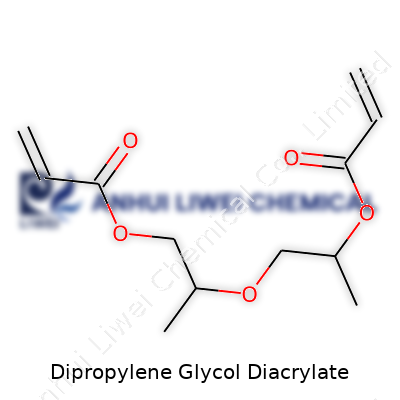
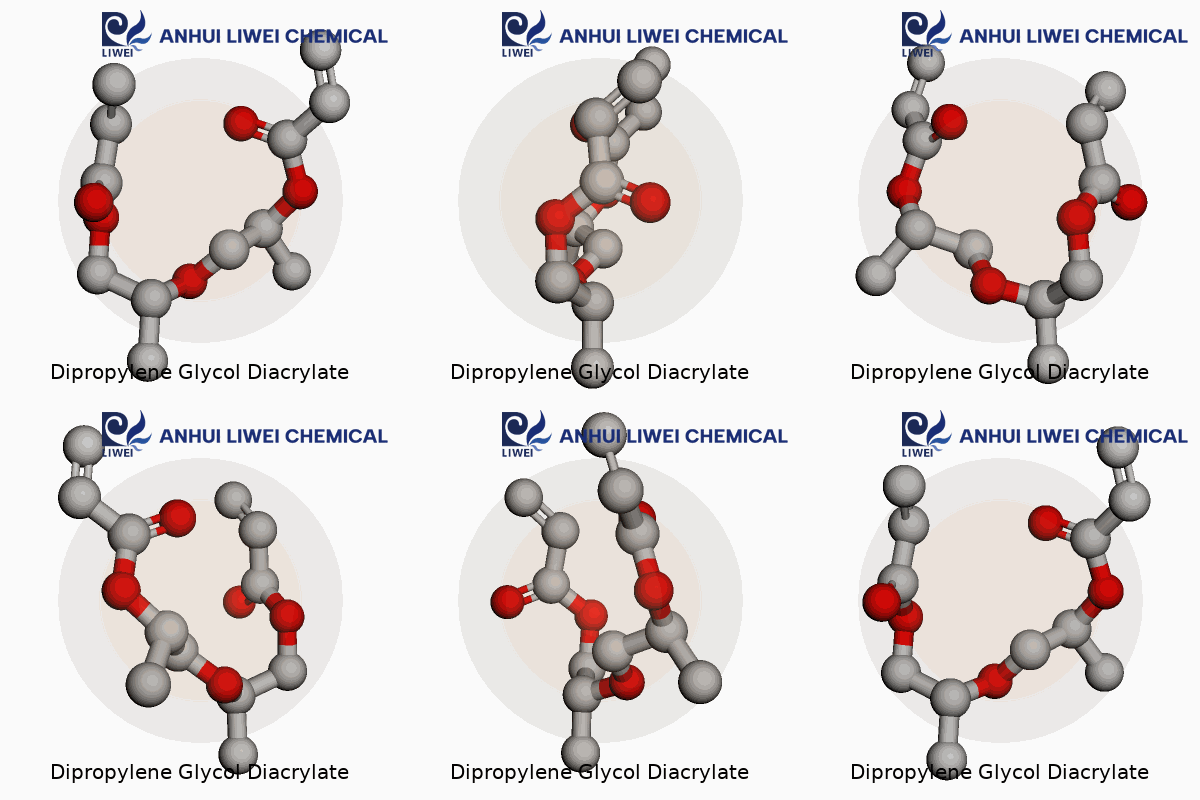
Dipropylene Glycol Diacrylate: Substance Deep Dive
Historical Development
Chemists have worked with acrylate esters for close to a century, tinkering with their structures to add flexibility and resilience to coatings and adhesives. Dipropylene glycol diacrylate entered the scene as industries ramped up for plastics innovation in the mid-20th century. With tighter regulations on solvent-based chemicals, formulators looked for monomers that cured quickly and brought little toxicity to the shop floor. Dipropylene glycol diacrylate slotted right into this need thanks to its low viscosity and solid crosslinking abilities. Paints, dental materials, and electronics grabbed onto its performance, turning what started as a niche compound into a mainstay for events like rapid UV-curing and advanced 3D printing.
Product Overview
Made as a clear or slightly yellow liquid, dipropylene glycol diacrylate builds tough polymers after exposure to ultraviolet light or radical initiators. This monomer acts as both a reactive diluent and a crosslinker. What this means in daily use: manufacturers can fine-tune drying times or tweak how tough a surface gets. Whether filling tiny dental impressions or slathering on fast-set floor coatings, this compound quietly shapes the finished feel, durability, and clarity of the final product. It brings compatibility with other acrylates, so it plays well with many recipes, including high-performance coatings and specialty adhesives for electronics.
Physical & Chemical Properties
Its molecular formula, C14H22O6, might not mean much at first glance, but each batch pours as a viscous, non-crystalline liquid that barely mixes with water. The scent, if any, gives a faint chemical whiff, nothing overpowering. With a boiling point well above normal room temperatures and a relatively low vapor pressure, it doesn't just disappear into the air, keeping exposure in check if ventilation works right. This compound stands out because it remains stable under most storage conditions, as long as sunlight stays away. Exposed to UV, it triggers polymerization without much fuss, making it a reliable workhorse for industrial chemists.
Technical Specifications & Labeling
Labels for dipropylene glycol diacrylate carry details that matter to users and regulators: batch purity, stabilizer presence, and recommended storage. Purity typically sits above 95%. Common stabilizers like hydroquinone help suppress accidental polymerization between manufacturing and end use. Handlers read these labels closely, watching for shelf life, flashpoint near 100°C, and hazard codes tied to skin sensitization or eye irritation. Regulators across regions demand material safety data sheets that spell out potential allergies, fire hazards, safe handling directions, and disposal methods. Each drum or pail arrives tagged with UN numbers and pictograms to catch attention whenever staff move or dispense the product.
Preparation Method
Synthesis starts with dipropylene glycol, which reacts with acryloyl chloride or acrylic acid in the presence of a catalyst and a base. The reaction gets monitored carefully: water content gets minimized to sidestep unwanted hydrolysis, and temperatures remain controlled to prevent runaway polymerization. After the main reaction, distillation or washing steps remove unreacted starting materials and by-products. Formulators add a stabilizer—often at fractions of a percent—and fill into storage containers under a nitrogen blanket to keep oxygen away. Manufacturing lines run closed to avoid stray vapors, and all process water routes directly to treatment tanks.
Chemical Reactions & Modifications
In practical settings, dipropylene glycol diacrylate doesn’t stay monomeric for long. Under the right light or heat, the twin acrylate groups react with free radicals, linking up with themselves or other vinyl monomers to create giant interlocked chains. Some labs tweak the base structure, grafting on other acrylate esters or inserting fillers that tune viscosity or film hardness. Additives, such as photoinitiators or specialized pigments, often blend in before curing. This adaptability encourages innovation in inks, varnishes, or specialty medical polymers, turning basic chemistry into custom materials for each end use.
Synonyms & Product Names
Chemical suppliers and catalogues may list dipropylene glycol diacrylate under several aliases: DPGDA, 2-Propenoic acid dipropylene glycol ester, or even its systematic IUPAC name. Proprietary blends carry trade names, each aimed at inkjet printing, optical films, or adhesive applications. Local regulations sometimes require every name—and even registration numbers—on packaging and shipping documentation. End users rely on these synonyms, especially when searching for technical specs across regional or global inventory systems.
Safety & Operational Standards
Working with dipropylene glycol diacrylate calls for real diligence. Technicians use goggles, nitrile gloves, and good ventilation in mixing rooms to keep skin and respiratory contact down. Spillage routines spell out absorbent pads, hazardous waste bins, and immediate cleanup. Plant guidelines often limit open containers, insist on closed transfer lines, and check for spills or drips with regular inspections. Eye wash stations and showers sit close at hand in real-world labs and production halls. Teams run periodic safety training and review incidents to keep exposures as low as possible. At the regulatory level, authorities track workplace exposure, enforce storage rules, and restrict disposal downstream to control wider environmental release.
Application Area
Dipropylene glycol diacrylate’s reach stretches across several industries. UV-curable coatings for wood flooring, metal cans, or automotive parts owe their durability and gloss to this monomer's rapid polymerization. In dental labs, it helps set shape quickly for fillings and crowns. In electronics, printed circuits need precise patterning and adhesion, which this compound helps secure. Even graphic arts, like inkjet inks or screen-printing pastes, depend on fast-curing, low-warp mixtures—possible thanks to DPGDA. The demand for robust 3D prints in prototyping and small-batch manufacturing circles back to acrylate chemistry, pulling DPGDA into new hands every year.
Research & Development
Lab teams around the world haven’t stopped exploring new tweaks and uses for acrylate monomers. Ongoing research dives into more efficient photoinitiator systems, greener production catalysts, and blends that sidestep traditional irritancy. Blockchain-tracked materials and “smart” coatings in consumer electronics hinge on reliable monomers like dipropylene glycol diacrylate. Whether it’s evaluating stronger crosslinking networks, developing flexible electronics, or chasing alternatives to conventional stabilizers, the R&D clock never actually winds down. Each published study hints at another layer of resilience, process speed-up, or eco-friendlier reaction pathways to scale up next.
Toxicity Research
Toxicologists track several fronts when they look at dipropylene glycol diacrylate: skin sensitization, respiratory effects, and environmental fate. Direct skin contact can trigger dermatitis in sensitive users, so repeat patch testing sits high on monitoring lists. Workers in dental labs reported the odd rash in older studies, but new gloves and ventilation practices make a big difference. Chronic inhalation studies in rats don’t show much risk at ordinary exposure levels, though accidental vapor generation can still sting. Once it leaves a facility, the substance tends to biodegrade under normal wastewater treatment, but some breakdown products need watching. Ecosystem studies have started mapping out whether aquatic life gets affected at trace levels, prodding regulators to update handling rules as more data rolls in.
Future Prospects
As designers aim for even faster-curing, tougher, and greener plastics, dipropylene glycol diacrylate's chemistry has more ground to cover. Start-ups and established players both chase biodegradable blends or bio-based raw materials to answer sustainability demands. Engineers want resins that shrink even less, resist yellowing, and adapt to direct digital manufacturing. Some researchers now eye up “functional” acrylates that switch properties under certain lights or temperatures, tapping into the base chemistry DPGDA offers. Even with newer monomers lining up, the balance of price, flexibility, and performance keeps dipropylene glycol diacrylate on plenty of research benches and shop shelves. With regulation and consumer expectations evolving, the compound’s adaptability could turn it from a workhorse into an eco-engineered star of next-generation plastics and coatings.
What It Does in the Real World
Step into any room with a new floor coating or flip through pages of glossy product packaging, and you might not see the name Dipropylene Glycol Diacrylate, but it works behind the scenes in industries that shape how we live. This substance holds a special place in the making of inks, coatings, adhesives, electronics, and even the composites found in cars or boats. It’s not just a drop-in—it touches the durability and quality of things we use every day.
Why Manufacturers Pick It
Years ago, I worked on a project that involved designing household tools. For those looking to get a fast cure from ultraviolet light, Dipropylene Glycol Diacrylate came out as a top choice. Its chemical structure helps form hard, scratch-resistant layers in minutes. If you’ve noticed your kitchen counter doesn't stain as quickly as it once did, there’s a good chance this ingredient had a hand in that upgrade.
The electronics field relies on this diacrylate for making printed circuit boards. This stuff doesn't just add stick—it creates a tight, reliable bond that resists the stress of heat and handling. Once electronics heated up on the workbench, weaker adhesives just didn’t stand a chance. Having something that keeps its integrity under pressure means fewer repairs, less waste, and longer-lasting devices.
Which Products Contain It?
3D printing has hit the mainstream, and resins using Dipropylene Glycol Diacrylate make it easier to produce strong, flexible prints. Artists and engineers favor resins that balance crisp detail with just enough flexibility. Photopolymer resins in dental molds and crown prototypes also owe their performance to this chemical. Dental professionals expect sharp fit and strength, so the formulation matters every time.
In the flooring and construction field, protective coatings take a daily beating from foot traffic, sunlight, and spills. Fast-curing coatings based on this compound save hours on job sites and let people walk on new floors much sooner. Homeowners and contractors get peace of mind because the protective finish stands up to more abuse before giving way. The same goes for the automotive sector, where tough coatings shield vehicles from scratches and weather damage.
Safety and Environmental Points
With so many uses, safety comes up for good reason. Direct contact causes skin irritation for some people, so workers need gloves and masks when handling raw materials. Some regions regulate how much gets released into the air at factories, aiming to limit risks for both employees and neighbors. The reality: this chemical doesn’t linger in the environment like heavy metals or some older plastics. Manufacturers look for ways to recycle leftover material, cutting down on waste and the need for disposal.
Looking for Smarter Alternatives
Nobody wants performance at the expense of health. Scientists investigate new blends that reduce potential skin reactions and improve biodegradability, especially since demand for sustainable products grows every year. If the chemistry can match today’s high results and offer fewer side effects, industries will likely make the switch. Safety testing and transparency build trust. Businesses survive if they care about the people working with these ingredients as much as the consumers using the final products.
What People Use It For
Some people spend their days around chemicals, especially those in nail salons, printing businesses, and manufacturing. Dipropylene Glycol Diacrylate, a common ingredient in UV-cured coatings, adhesives, and nail gel polishes, enters the picture here. Folks like nail artists rely on products promising lasting finishes, and plenty of companies use photopolymers for quick drying and hard coatings. With so many hands in the mix, people pay attention to what goes in these bottles.
Straight Talk on Health and Exposure
I’ve seen more than one workplace treat strong-smelling liquids like background noise, but that approach can backfire. Coming into contact with Dipropylene Glycol Diacrylate, especially through skin or inhaling fumes, isn’t all that rare in certain jobs. Studies show this stuff can spark allergic reactions, mainly for people who work with it day after day. It’s the sort of allergic response where red, itchy skin pops up, sometimes sticking around for weeks. Inhaling the vapors can also irritate noses and lungs. Even brief exposure may trouble some people—especially those already sensitive to chemical ingredients.
According to the American Contact Dermatitis Society, acrylates like this one rank among the top causes of work-related skin allergies. The European Chemicals Agency lists Dipropylene Glycol Diacrylate as a skin irritant and a possible sensitizer. It isn’t a cancer risk, but the long-term price is developing a chemical allergy, sometimes permanent. I know nail techs who had to quit after their skin couldn’t handle one more polish job. Wearing gloves might look like enough protection, but the wrong kind lets liquid sneak through.
Regulation and Consumer Assumptions
Just because something’s sold over the counter or marketed to salons doesn’t mean the safety jury is in. Safety boards in the US and Europe ask for clear warning labels on these acrylics. Workers—especially those in small salons—often hear about chemical risks long after trouble begins. Not every bottle features readable labeling, and some import products skip safety standards altogether. This is more common than you’d hope.
From personal experience, customers rarely ask about ingredients. They trust what’s available. Yet the basic truth: a chemical designed to stick under UV lamps can definitely stick to skin, too. Dozens of allergy cases tied to gel nails, adhesives, and hobby resins have caught media attention since the mid-2000s. The problem isn’t just in pro shops—home users can face allergic reactions, too, since “at-home” kits became popular.
Reducing the Risk
The most practical move starts with solid information. Training for beauty workers needs to stress which gloves block chemical penetration—nitrile stands out, while latex and vinyl fail fast. Salons should use proper ventilation to keep fumes down and encourage handwashing after any little spill. Product makers need sharper labeling and honest claims about both the strengths and risks.
More importantly, buyers—whether they run a shop or paint their own nails for fun—deserve to know what’s inside every bottle. Anyone handling these products regularly ought to know about skin-sensitizing ingredients and pay attention to warning signs like redness or burning. Most manufacturers share data sheets online for a reason—there’s helpful info right there about how to work safely, handle spills, and what to do if a rash shows up.
Wrap Up
Awareness makes a difference. For Dipropylene Glycol Diacrylate, “safe enough” depends on reading labels, using real protection, and paying close attention to how your skin responds. This matters most for those who live and work around these chemicals week in, week out.
Understanding the Risks
Dipropylene glycol diacrylate turns up in a lot of industrial workplaces, from paint shops to electronics plants. Anyone who's ever popped the top off one of these containers knows the sharp, almost sweet odor. What looks harmless in the drum can cause real trouble if handled carelessly.
Skin contact sparks irritation before long. Breathing in its vapors leads to headaches and dizziness. Wiping it up barehanded – a shortcut I saw more than once in small shops – often means red, itchy skin for days. Once, a friend ignored a tiny spill, thinking such a small amount wouldn’t hurt. By the next morning, he regretted not donning gloves and a proper respirator. Severity might creep up quietly, and ignoring symptoms can put health at real risk.
Practical Steps for Safe Handling
Choosing the right personal protective equipment makes all the difference. Usually, this starts with splash goggles, chemical-resistant gloves, and a sturdy apron. Some colleagues, during a summer rush, felt tempted to ditch their gear. Within a week, two developed allergic reactions, missing valuable production time. A full respirator, not just paper masks, stands out in cramped or poorly ventilated rooms.
Proper training cannot be overlooked. Relying on some quick orientation slides doesn’t get workers ready for what really happens around barrels, leaking fittings, or open workspace tanks. One company I worked with saw a dramatic drop in accidents after switching to hands-on demonstrations, letting people actually handle empty drums and simulate clean-up. Clear labels and easy-to-read safety data sheets matter. When complicated technical jargon clogs up instructions, workers zone out, miss key steps, and accidents spike.
How to Store It Without Accidents
Storage comes down to keeping this liquid cool, away from sparks, sunlight, and heat sources. A few years back, I witnessed a warehouse fire start because someone stacked containers next to a generator’s exhaust. Fire investigators pointed out the rows of cardboard packaging – dry as tinder – set the perfect stage for disaster. Even though nothing burned through, toxic fumes mean clean-up lasts for weeks, halting business and risking everyone’s health.
Always use metal drums or sturdy polyethylene bins with tight lids. Tipping over happens quickly if containers aren’t securely blocked. Once, after someone forgot to close a drum, the contents thickened and cured right inside, forcing workers to chip it out with chisels. A simple habit of daily visual inspection, walking the rows of barrels at shift change, prevents expensive accidents.
No warehouse stays totally dry forever, but letting moisture build up means labels fade or peel. Rotated stock matters – old product near exits, new stuff in the back – so nothing sits too long. Crowding too many containers into cramped spots nearly always leads to dents, cracks, or leaks. Spacious layouts, clear aisles, and good airflow pay off in the long run.
Fostering Safety Every Day
Enforcing safe practices goes beyond posters on the wall. Open talks during team meetings about real incidents – not just hypotheticals – hit home. I remember one plant that shared accident details from sister sites in other states. Hearing about chemical burns or property losses from peers, not just anonymous case studies, sharpened everyone’s focus.
A safer workspace lowers turnover and improves productivity. Regular reviews of safety protocols, feedback from the floor, and swift correction of mistakes keep the entire operation running smoothly. Using basic protections and smart storage keeps dipropylene glycol diacrylate from turning into a workplace hazard.
Chemicals in Everyday Products
Dipropylene Glycol Diacrylate shows up in a surprising number of items, especially in the world of adhesives, inks, coatings, nail products, and even some 3D printing resins. It's easy to forget that behind the convenience of strong glue or a durable gel manicure sits a substance that needs careful handling.
Hazards Lurking Beneath the Surface
People who work in factories, nail salons, or print shops come into direct contact with Dipropylene Glycol Diacrylate far more often than shoppers at a drugstore. Even though most folks using these products rarely think much about the ingredients, this particular chemical raises some red flags. Skin contact leads to irritation and, over time, sometimes worse. Allergic reactions such as redness, swelling, itching, or blisters aren’t rare. I remember talking to a nail technician who got eczema across her hands after only a few months on the job. It turned out her gloves weren’t good enough. Not everyone’s immune system gives advance notice.
Inhalation adds another layer to the risk. Fumes produced during curing processes—like under UV light in salons or during large-scale printing—can irritate lungs and airways. Some studies tracked breathing problems after repeated workplace exposures, showing coughing, wheezing, or even triggering asthma-like symptoms in some people. Eyes, caught in the path of airborne droplets, may sting and burn. The Material Safety Data Sheets point out the potential for serious harm with enough exposure—including chemical burns.
Long-Term Concerns and Unknowns
Stories from the field back up what researchers warn about: regular exposure, even at small doses, can lead to chronic problems. Allergic sensitization does not go away easily. Once the immune system reacts to this acrylate, it can get triggered again, sometimes at lower amounts than before. For workers, that means missing time off, dealing with persistent rashes or breathing troubles, and even switching jobs if symptoms get tough enough.
There are open questions about long-term health. Animal studies link similar acrylates with DNA changes, though evidence in people remains less clear. What’s certain is that European and North American regulators do not consider it a benign substance. Agencies require hazard warnings, strict labeling, and personal protective gear in environments using Dipropylene Glycol Diacrylate.
Reducing Risk—Personal and Industrial Steps
Avoiding direct skin contact ranks as a priority. In my time working around adhesives, I learned that gloves make a difference, yet not all gloves protect equally—latex breaks down, while nitrile or neoprene stand up better. For anyone managing a nail salon or small shop, improving ventilation matters just as much. Good local exhaust keeps those invisible fumes out of people’s lungs, not just out of the building.
Employers carry responsibility for training, offering the right safety gear, and maintaining up-to-date chemical inventories. But everyone handling these products shares in the responsibility. Reading labels, never skipping gloves, keeping food and drink out of the workspace—these habits protect health. Switching to safer alternatives, such as less sensitizing resins, also makes sense for businesses able to source them.
Consumers can press for transparency. Demanding clear ingredient lists on polishes or adhesives and choosing brands with better safety records helps nudge the market. Awareness, not anxiety, lets people make smarter decisions and shapes a safer workplace for those who handle chemicals every day.
Recognizing Why Tough Chemicals Demand Care
Dipropylene Glycol Diacrylate often finds a place in resins, inks, and adhesives. Its versatility pulls many manufacturers, but those same chemical traits mean extra caution at the end of its life. Tossing leftovers or containers down the drain is a shortcut with long-term costs. Many of us have seen what ignoring chemical safety does—communities struggle with tainted groundwater, fish populations drop where runoff meets rivers, and local waste workers face avoidable health hazards.
Why Proper Disposal Protects More Than the Law
Disposal rules for chemicals like this do not just fill regulatory boxes. Most folks handling these substances, from lab techs to shop managers, know what a spill smells like—the sharp, synthetic bite lingers. Skin or eye accidents happen faster than people suppose, and over time, small exposures add up. The risks are not only local. In the wrong landfill, these liquids seep through liners, reaching soil and, eventually, water tables. There is a reason people worry about 'forever chemicals' and toxins persisting in ecosystems.
Looking at Existing Guidance
Most safety datasheets put it directly: treat leftover Dipropylene Glycol Diacrylate as hazardous waste. There is no shortcut. Municipal waste programs rarely accept liquids like this, especially ones with acrylate groups. Some people might think small amounts dilute safely, but trace spills accumulate. Research shows chemical traces in urban runoff concentrate fast, especially after storms.
The Environmental Protection Agency lays out rules that match global standards. Designated hazardous waste facilities have the know-how and gear to neutralize or safely contain these chemicals. Local disposal companies sometimes run special collection days for solvents and lab reagents—folks working outside big cities may have to call ahead or partner with regional labs for group collection.
It is not just about the chemical itself. Containers and rags used for clean-up take on enough residue to count as hazardous, too. Packing these in leakproof, labelled drums or approved bags prevents mix-ups down the line.
Responsibility Sits With More Than Just Industry
Most people assume big factories are the source of trouble, but a lot of waste starts in small shops, school labs, or repair businesses. Once, while working in a shared makerspace, I watched a couple of hobbyists try rinsing out an acrylate resin cup with a garden hose. The smell hung around for days, and a staff member got a nasty rash—hard lessons come quickly.
Teaching safe habits takes more than warnings on a label. Clear training, regular reminders, and visible disposal supplies (like hazard bins or absorbent kits) make a real difference. Many fire departments or local environmental offices share guides tailored for small businesses, and reaching out is usually free.
Fixing the Gaps
To prevent mishandling, making disposal both simple and cheap helps. Community drop-off sites, better signage, and collection partnerships bridge gaps for individuals. Schools and workshops that rotate chemical stock can work together on joint waste pickups, splitting the logistics and costs. As industries shift toward greener chemistries, users should keep pushing for safer alternatives, but until then, treating leftovers like the hazards they are remains non-negotiable.
People owe their neighbors, coworkers, and future generations careful stewardship. Safe disposal does not require advanced degrees—just a little planning, the right support, and a refusal to shrug off responsibilities.