Phenoxyethyl Acrylate: Exploring Its Journey, Uses, and Future
Historical Development
Looking at the origin of phenoxyethyl acrylate takes me back to the era of rapid advances in polymer chemistry. After World War II, the world’s appetite for new materials grew strong. Chemists, driven by curiosity and industry demand, searched for ways to create coatings that could outlast tough weather and harsh chemicals. Phenoxyethyl acrylate became part of that search, gaining attention in the 1970s as researchers honed methods for linking acrylate monomers with aromatic ethers. Over time, big chemical plants shifted away from older, less stable esters, preferring chemicals with better flexibility and performance. The addition of the phenoxyethyl group answered growing requests from manufacturers who needed their coatings, adhesives, and inks to resist yellowing and cracking under stress. Years in the lab, countless pilot runs, and feedback from the field shaped the standards we see today. As the decades rolled forward, this compound found its place in product catalogs around the globe, listed under trade names alongside more common acrylic monomers.
Product Overview
Phenoxyethyl acrylate, often packaged as a clear, nearly colorless liquid, plays a huge role in both niche and mainstream formulations. Polymer plants and R&D labs alike value its capacity to toughen films, grant flexibility, and keep surfaces gleaming without breaking down. Manufacturers bottle it under names like “2-Phenoxyethyl Acrylate” or “PEA monomer,” often highlighting its ability to produce glossy, impact-resistant coatings for floors, factory equipment, and even some medical devices. This isn’t just another acrylate — it’s a versatile building block hailed by chemists who need reliable reaction profiles and predictability in their polymer blends. Over the years, as I’ve handled resin batches with this additive, I’ve seen firsthand how it breathes new life into brittle formulas, turning them into long-lasting surfaces that endure.
Physical & Chemical Properties
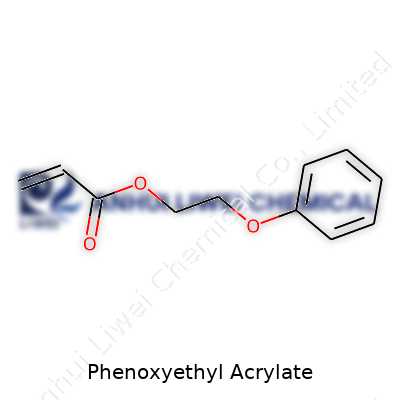
You can spot phenoxyethyl acrylate by its mild, slightly floral odor and oily texture. A typical bottle will show little color, staying stable in most storage conditions. On the numbers: it weighs in with a molecular weight of about 206 g/mol, and its boiling point lands just above 290°C, though working with it at high temperatures risks unwanted polymerization. In the lab, the liquid’s refractive index and viscosity offer clear markers for quality control. Its blend of an aromatic ring and a flexible ethylene chain makes it stand out, giving end products like paints and adhesives the right mix of toughness and bend. Phenoxyethyl acrylate dissolves well in a range of organic solvents, which broadens its utility but also makes careful handling a must to cut down on emissions and exposure.
Technical Specifications & Labeling
Labels on bulk containers and smaller drums tell a lot about the growing scrutiny around chemical standards. A standard shipment will list its purity—often above 98% for industrial work—accompanied by water content and acid number to manage reactivity. Modern safety data sheets (SDS) attachments add info on shelf life, recommended storage below 25°C, and “store away from sunlight.” Expect to find batch numbers, hazard pictograms, and warnings about inhalation or skin contact. Some suppliers ship it stabilized with small doses of hydroquinone to fend off unwanted gel formation. With regulations like REACH and TSCA in full force, these labels help buyers know they’re dealing with compliant, high-grade material, and I’ve come to trust suppliers who show that attention to detail from the drum all the way to the last safety tag.
Preparation Method
Industrially, most phenoxyethyl acrylate comes from the straightforward reaction of 2-phenoxyethanol with acryloyl chloride. Under anhydrous conditions, mixing the alcohol and acid chloride, often in the presence of a mild base like triethylamine, frees up hydrogen chloride. The base mops up this gas, limiting byproducts and keeping the reaction moving. The process demands well-tuned temperatures and thorough purification to recover a clean, high-purity product. Skipping steps or rushing the process risks leftover acid or hydrolysis, spoiling the resin’s long-term performance. I’ve found that even a slight slip in vacuum distillation can introduce tints or hydrolysis products that muddy large-scale batches.
Chemical Reactions & Modifications
Once the monomer’s in the bottle, there’s a world of polymer chemistry ready to spring to life. Free-radical polymerization stands out as the favorite—just add the right initiator, and the acrylate group hooks up into long, tough chains. Copolymerization with other acrylates or methacrylates opens doors for tuning properties like stretch or hardness, which sets up product lines from flexible floor coatings to rigid industrial adhesives. Chemists—even those working on lab benches like mine—often experiment with additives or new initiators to speed up curing or cut emissions. Further along the value chain, phenoxyethyl acrylate can anchor crosslinking, tether other functional groups, or participate in UV-cure formulations. This means faster, greener production for many cutting-edge applications.
Synonyms & Product Names
In catalogs and order forms, phenoxyethyl acrylate can masquerade behind plenty of names. The full IUPAC version—2-phenoxyethyl acrylate—sits beside entries like PEA, acrylic acid 2-phenoxyethyl ester, or even “PE Acrylate” from certain European makers. The trade name sometimes adds a twist—“Acrylphen” and “PhenoxAcryl” crop up in markets from Asia to North America. Seasoned buyers watch for these names to sidestep confusion, especially given that two similar chemicals like “phenoxyethyl methacrylate” or “phenoxypropyl acrylate” appear in the same catalogs and reward a second look.
Safety & Operational Standards
Handling phenoxyethyl acrylate means respecting its risks as much as its benefits. I’ve sat through enough hazard briefings to know that continuous exposure, whether through skin or lungs, cannot be ignored. The compound carries an irritation risk and brings flammability concerns, demanding local exhaust ventilation, gloves, and goggles. Regulatory frameworks—OSHA, REACH, and local equivalents—lay out exposure limits and demand spill plans. In my experience, good factory habits, including regular training and up-to-date safety data on hand, keep teams safer. Fire marshals want flammable cabinets, grounding straps, and no open flames nearby, especially during hot work. The industry shift toward closed-loop handling systems and improved monitoring fits the push for safer work, matching the regulatory environment that expects operational discipline from every player in the supply chain.
Application Area
The real power of phenoxyethyl acrylate comes alive in its applications. Walk across a high-gloss industrial floor, and you likely step on a surface treated with this monomer. Its key claim to fame rests in tough, scratch-resistant coatings—for automotive parts, machinery, flooring, and sometimes electronics enclosures. Printers and ink mills mix it for its fast cure and rich pigment blending, while adhesive formulators value how it fends off yellowing and stress-cracking even after months outside. Dental labs and medical device makers have explored its use in biocompatible polymers, after enough toxicology checks. Its profile fits low-VOC, high-durability needs, so companies chasing “greener” certifications keep it on their list of go-to resin building blocks. I’ve worked with waterproofing resins where the difference with and without phenoxyethyl acrylate shows within weeks of weathering.
Research & Development
At the frontier of polymer research, phenoxyethyl acrylate attracts teams chasing both higher performance and sustainability. Scientists push to blend it with bio-based monomers, reduce emissions in processing, and create new hybrids for electronics or medical implants. In academic journals, studies dig into its compatibility with novel initiators for faster, lower-energy curing, while big chemical players invest in process intensification to trim waste and energy cost. Pilot plants test ways to recycle production byproducts or recover solvents for closed-loop manufacturing, matching both regulatory pressures and real-world resource constraints. Talking with colleagues who run experiments on dispersion or copolymer toughness, I’ve seen how this monomer remains a hot topic for incremental gains and big leaps alike.
Toxicity Research
Every chemical earning a place in high-stakes applications like adhesives, inks, and coatings needs a clear toxicological picture. Phenoxyethyl acrylate has crossed a growing gauntlet of lab and regulatory reviews over the decades. Key animal studies—a mainstay in the field—evaluate skin and eye irritation, sensitization, and longer-term exposure to vapor. Results show mild to moderate irritation, especially with repeated or direct contact, but no strong evidence yet of carcinogenicity with typical industrial handling. Regulatory bodies in North America, Europe, and Asia continue to monitor workplace exposures, updating permissible exposure limits and labeling based on evolving evidence. I always keep my eye out for new studies—especially those that look at breakdown products and waste, since those can sometimes carry more risk than the original monomer. Modern safety programs at responsible companies insist on reviewing the latest toxicology before rolling out new resin blends.
Future Prospects
If you look ahead to the next decade, phenoxyethyl acrylate sits right in the thick of market and policy changes. Demand grows not only for higher-performing coatings and adhesives, but also for chemicals that meet tough VOC and toxicity standards. Initiatives for circular economy and decarbonization set the agenda for both manufacturing processes and product formulation. Researchers and engineers press for new production methods that recycle more solvents, cut water use, and rely less on fossil-based feedstocks. Application scientists eye wearables, flexible electronics, and building materials that merge high performance and sustainability—two buzzwords that now anchor almost every R&D meeting I attend. Regulatory shifts force companies to keep toxicology and reporting up-to-date, while performance labs race to formulate faster-curing, stronger, and safer products. The future likely sees new crosslinked variants, bio-derived entries into product catalogs, and perhaps more recycling of the spent materials at end-of-life. In my work, projects with phenoxyethyl acrylate rarely go stale: it continues to open new questions and challenges, remaining a vital piece of progress in the world of advanced materials.
Acrylics That Do More Than Stick
Phenoxyethyl acrylate shows up where toughness and flexibility matter. My first encounter with it happened on a job at a local sign shop. After handling vinyl sheets and solvent inks, suddenly there were these new, odorless resins that dried fast and stuck well. Turns out, those came from a special class of chemicals including phenoxyethyl acrylate.
Resins With Backbone
Commercial painting has shifted over the past decade—less talk about off-gassing, more attention to strong finishes that last. Phenoxyethyl acrylate helps pull this off. It gets blended into coatings that cover machinery, cars, and floor finishes. Low odor and fast cure times help workers get jobs done without lengthy delays. I’ve talked with contractors who count on these new paints to hold up where old formulas fade and chip.
The science behind it comes down to links—phenoxyethyl acrylate helps build strong, flexible chains during the curing process. The molecule’s structure adds a touch of toughness you don’t find in plain acrylics. You see this performance in things like UV-curable inks, wood coatings, and sealants. This tough but flexible plastic is not just about durability. Its lower viscosity helps manufacturers get the right flow for smooth surfaces, which matters when you’re working under pressure to deliver a clean product.
All About The Cure
Fast curing means less downtime in factories and print shops. UV-curable resins containing phenoxyethyl acrylate speed up production. Workers rely on this efficiency for high-volume pressing, packaging, and labeling where delays cost money. Print shops and electronics factories especially count on fast cures to keep products moving down the line. Many resin and ink chemists prefer it for the balanced mix of speed and finish quality.
Weatherproofing and More
Outdoor signs, painted benches, even consumer electronic parts gain added weather resistance because of phenoxyethyl acrylate. Anyone who’s lost a set of patio chairs to flaking paint knows how weather can ruin a surface. I’ve seen old signs get repainted with newer coatings based on acrylate chemistry—and they keep their shine through rain, snow, and sunlight. The finish holds up longer and the color fades more slowly compared with paints that skip these new resins.
Health and Safety
Workers ask about safety, so let’s talk straight. Like most raw chemicals found in paints and adhesives, phenoxyethyl acrylate deserves respect. Safety data sheets echo the need for gloves and good ventilation. Trusted manufacturers publish test data showing safe levels in cured products. In the pursuit of low-emission building and “green chemistry,” more resin firms aim to reduce hazardous ingredients. Finding ways to limit worker exposure and provide reliable ventilation protects everyone in the supply chain.
What’s Next?
As the world looks for greener, tougher plastics and paints, phenoxyethyl acrylate finds a spot in the lineup. Its balance of flexibility, strength, and cure speed connects with real-world needs in coatings, electronics, and printing. Continual research into safer alternatives, better recycling, and improved transparency helps deepen trust with customers and workers. After years in the field, I’ve come to respect how chemicals like this shape products that stand up to daily use—and how much thought goes into making them safer for everyone.
Understanding What You’re Dealing With
Phenoxyethyl acrylate shows up in places you wouldn’t expect. Paints, coatings, adhesives—it’s common in factories and workshops where people work with plastics and glossy finishes day in and day out. Most folks outside those industries probably never hear about it, but if you spend time on the production floor or in a lab, the word comes up often. The thing is, some chemicals get a bad rap without context. So the real question hangs over everyone’s head: does it actually threaten people’s health?
Facts About Phenoxyethyl Acrylate’s Hazards
Experience teaches you real quick that labels matter. Phenoxyethyl acrylate wears the “hazardous” title according to the Globally Harmonized System (GHS). Summary: direct skin contact can trigger irritation, redness, or a rash. Stick around the fumes, and your lungs might tell you all about it, especially in poorly ventilated spaces. In repeated cases, technicians report dry skin, cracked hands, and inflamed eyes.
Acrylate monomers—phenoxyethyl acrylate included—aren’t “mild” substances. The science is clear. Information from regulatory bodies like the European Chemicals Agency and American NIOSH shows that improper handling brings risks. That’s not scaremongering; skin irritation and allergic reactions have been noted in multiple occupational health studies. Take, for example, reports in workplaces using acrylates for composites or resins—cases of dermatitis and asthma point back to the same culprit.
Worry About Toxicity or Long-Term Risk?
Nobody likes a scare story. There’s no evidence that short exposure causes chronic health problems like cancer, but that doesn’t mean it’s time to relax the gloves. Most acrylates affect the skin first. Anyone ignoring basic precautions is risking their health, especially if splashes or vapors enter the mix. Some people develop a sensitivity over time—exposure gets under their skin, and the after-effects last much longer than that day’s shift.
In my own time around production lines and coating facilities, the difference between minor irritations and real medical headaches often boiled down to how seriously the team took chemical hygiene. I’ve seen workers push through tingling hands and red wrists, brushing it off—until the irritation worsens or spreads. Once a sensitivity develops, it doesn’t go away easily.
Reducing Risks in the Real World
You don’t need expensive technology or shiny tools to reduce the hazards. At the basic level, gloves that actually fit, splash goggles, and proper ventilation cut risks down to size. Training makes the biggest dent—not just “read this sheet” type, but actual demonstrations of what splashing looks like, what fumes feel like after a few hours, and where the safest exit routes sit. Folk tend to ignore warnings that sound too chemical. Real stories, practical advice, and visible caution hit home harder.
Good ventilation eats up vapor before it builds to a headache-inducing cloud. Disposable nitrile gloves stand up well against acrylates, while latex falls short. Companies with a reputation for safe handling always keep washing stations and fresh gloves within easy reach. If a spill lands on skin, rinsing quickly stops a lot of trouble from brewing. Factoring these habits into every shift keeps risks from piling up.
Takeaway: Respect, Not Panic
No factory, lab, or art studio expects to run without some exposure—phenoxyethyl acrylate isn’t going anywhere in manufacturing soon. The smart approach is respect. Treat it as hazardous, because the evidence says so, and prevention steps aren’t rocket science. Safety culture lives or dies in the habits people pick up on the floor, not just in the rulebooks.
Why It Matters for Everyone in the Lab
Phenoxyethyl Acrylate shows up in a lot of coatings, adhesives, and inks, carrying a reputation for good performance but also for being a bit tricky to handle. Anyone working with chemicals knows that mistakes in storage or handling end up costing more than just product loss—they also threaten safety, and the fallout from even small exposures reminds us why every detail counts.
Safe Storage: Small Steps, Big Impact
Think of storage not as an afterthought, but as a chain—one weak link, and everything else follows. From years in specialty labs, I’ve seen that most problems start because someone tries to “just put it on a shelf” like any other solvent. That’s heartache waiting to happen.
Keep Phenoxyethyl Acrylate tightly sealed in original containers. The substance reacts to moisture in the air and sometimes begins to polymerize if left exposed. You want a container that keeps out water vapor and oxygen. Go for a spot that keeps the temperature stable, away from any heat sources, open flames, or direct sunlight. Some shops use purpose-built flammable storage cabinets—these cabinets remain cool and dry, out of direct traffic. I still remember the mess an unchecked leaky cap made, gluing the whole shelf together—don’t cut corners here.
Also, steer clear of any contact with strong oxidizers, acids, or bases. These chemicals trigger dangerous reactions—the kind that bring in fire marshals or close down a lab for days.
Ventilation carries real weight. Even though Phenoxyethyl Acrylate doesn’t smell strong at first, its vapors add up fast in closed areas. Once, a co-worker ignored ventilation, banking on “just a quick task,” but ended up with a headache that lasted all day. This stuff needs fresh air moving through the work area, and container vents should let pressure out without introducing air.
Handling Precautions You Can’t Skip
Routine builds familiarity, but don’t let familiarity breed shortcuts. Every shop I’ve worked in has glove and goggle policies for a reason. Direct skin contact with Phenoxyethyl Acrylate burns outright and often causes allergic sensitization. This isn’t something you “get used to”—the risk goes up with every exposure. Nitrile gloves block it; latex doesn’t stand a chance.
You’ll want lab coats or coveralls and reliable eye protection. Fast action if there’s a spill matters—small drips clean up easily with absorbent pads, but anything bigger should get contained and removed according to hazardous waste policies. Washing hands thoroughly, even after glove use, cuts down on risk.
Workplaces should keep emergency showers and eyewash stations close by. The right safety culture means nobody needs to “tough it out” or “just wash it off later.” Every place I’ve worked with proper safety culture shows lower incident rates—and higher morale.
A Few More Thoughts on Solutions
Real improvement comes from training—not just paperwork, but real, hands-on practice with transfer, spill containment, and waste handling. Automated pump systems cut down exposure. Leak-proof secondary containment trays under bottles catch spills before they spread. Regular inspections keep surprises at bay.
These rules aren’t about making life harder. They help everyone go home healthy. Any company serious about its reputation and long-term costs pays close attention to how chemicals like Phenoxyethyl Acrylate are managed. The labs, warehouses, and shops that get this right build a safety reputation, cut expenses on downtime, and keep regulators happy—all while doing better work.
Working With Phenoxyethyl Acrylate
Anyone using phenoxyethyl acrylate in a lab or production setting learns quickly that handling chemicals is never just about pouring or mixing. Most chemicals, including this one, behave best when stored well and used within their reliable window. Most suppliers put phenoxyethyl acrylate’s shelf life in the range of one year, maybe stretching up to two under good storage conditions. Beyond that, risk grows—not only from changes in the chemical’s properties, but from increased hazards, wasted money, and potential job site disruptions.
Why Shelf Life Gets Cut Short
Experience teaches us that it’s not the number on the safety data sheet that decides when something goes bad. Temperature swings in a warehouse, light sneaking through a cracked drum, or a shipment sitting in an unregulated space over a weekend—these situations shorten a product’s shelf life faster than the calendar. Phenoxyethyl acrylate especially reacts to oxygen and moisture, slowly polymerizing until what was meant for a thin coating turns into a lumpy mess that gums up machinery.
Taking shortcuts, such as using half-sealed containers or storing drums outside, accelerates degradation and makes quality control impossible. Product that’s exposed or re-opened multiple times loses its reliability long before the “official” expiration date. Partners in the coatings and adhesives industry actually turned me on to logging every container’s open date and tracking movement to reduce chemical losses. It added fifteen minutes to my week and saved my team downtime in the long run.
Supplier Responsibility and Quality Assurance
Not every batch is equal. Even reputable suppliers have shipping hiccups. I ask for certificates of analysis on every lot and double-check arrival condition before signing off on storage. Some manufacturers add stabilizers—usually a small amount of a free radical inhibitor—that buys some extra time. But these aren’t miracle solutions. Without cool, dry storage and sealed packaging, inhibitor or not, the product won’t last.
I’ve seen businesses push expired phenoxyethyl acrylate into production, hoping the next batch will hide any slight off-quality. The result often is failed adhesion or curing problems, leading to costly recalls and trust lost with customers. On top of that, using expired materials complicates workplace safety, often forcing extra protective measures as a stopgap. None of these headaches show up on the datasheet, but each one matters.
Preventing Loss and Hazard
Hazardous waste disposal adds extra cost, and regulations treat expired chemicals just like spills. Tracking inventory closely and working in small batch cycles keeps loss under control. Our shop labels every drum with both the purchase date and the “use by” date. If a chemical reaches six months from expiration, we prioritize it for next-run jobs. New staff learn from day one that expired means stopped clock, not a gray area.
Sticking to a tight rotation schedule, climate-controlled storage, and honest communication with suppliers make the biggest difference. A systematic check every quarter on older chemicals in stock catches issues before they force a production halt. When in doubt, a quick test for viscosity and clarity usually reveals if the product crossed the line. If degradation shows up, I don’t argue with the evidence—it gets disposed of safely.
Keeping Operations Safe and Consistent
On paper, phenoxyethyl acrylate can sit for a year if no one disturbs it and the temperature averages under 25°C in the dark. Real-world experience says conditions are rarely perfect. Reliable processes for inventory, testing, and container maintenance matter more than just the date stamped by the manufacturer. The safer path blends manufacturer advice with practical, on-the-ground vigilance every time phenoxyethyl acrylate comes out of storage.
Why Safe Disposal Deserves Attention
Working with different chemicals in a lab or a shop teaches you pretty quickly: there’s no room for guessing games around cleanup and disposal. Phenoxyethyl acrylate isn't some harmless liquid. It gives off fumes, can irritate skin, and the clear liquid will catch fire fast if enough heat gets to it. People sometimes underestimate what a bit of splatter or a drip down a drain could do. Dumping this stuff like it’s water threatens groundwater and fish, and even a little left in the wrong place causes trouble for the environment.
Looking at the Health and Environmental Risks
Handling phenoxyethyl acrylate brings up concerns far beyond just sore skin or red eyes. This chemical enters the ecosystem if poured down a regular drain, making its way into rivers and lakes. Animals and humans both take the hit when something gets into drinking water or air. Long-term exposure links to breathing trouble, allergies, and can trigger reactions you might not expect. Every container, every cleanup leaves a mark if treated carelessly.
Understanding the Proper Steps for Disposal
You get a strong message working in any regulated workplace: laws do not bend around convenience. Hazardous waste rules spell out the steps, and cutting corners leads to fines, or worse, injuries. For phenoxyethyl acrylate, that means collecting the unused liquid and anything used to clean it up — rags, gloves, paper towels — into sealed, clearly labeled containers built for chemical storage. That label has to show the exact name and a warning right up front.
Storing these containers away from flame or heat proves just as important as the packaging. Ventilated storage rooms and keeping containers closed tight limits both accident risk and that piercing chemical odor nobody enjoys. It pays to keep the waste containers away from where food or drinks sit, too. Knowledge gained from those early years mopping up after other people: one forgotten cup can mean accidental poisoning.
Trusting the Pros with Disposal
Nobody on their own tackles chemical waste safely. Most of us do not have the equipment to neutralize or treat this kind of substance at home or in a small shop. Licensed hazardous waste handlers have the gear and permits to destroy or process the chemical safely. Handing the waste off to these teams avoids guessing. It also offers legal proof if anyone comes asking questions later.
Waste facilities often ask for safety data sheets or other proof of what exactly sits in the barrels or bottles. A call ahead, plus a quick check of the site's instructions, clears up confusion and keeps you within the law. In my experience, those places rarely turn people away — they’d rather take the time to do things right since their business depends on that reputation for safety.
Reducing Problems at the Source
Every person working with chemicals can cut down on risk, just by planning better. Buy only what you plan to use soon, and make sure everyone who might handle or clean up knows the right steps. Simple investments in chemical-resistant gloves, labels, and a logbook keep accidents from turning small mistakes into disasters. Regulations like OSHA exist because the hazards are real — ignoring them never ends well.
Safety in chemical disposal starts with responsible habits. Those lessons from the field and the lab all point the same direction: respect what you’re working with, stay honest about dangers, and call on experts sooner rather than later.